
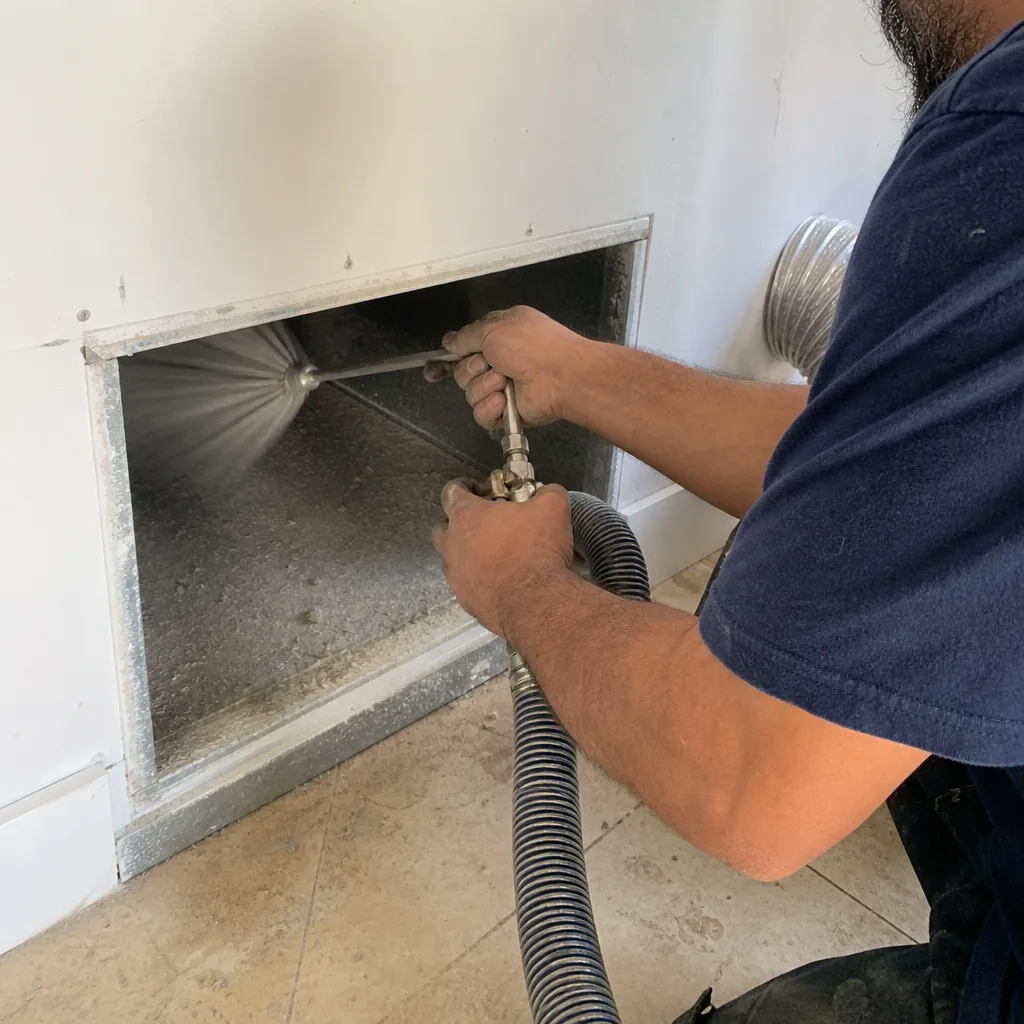
Last updated November 14, 2026
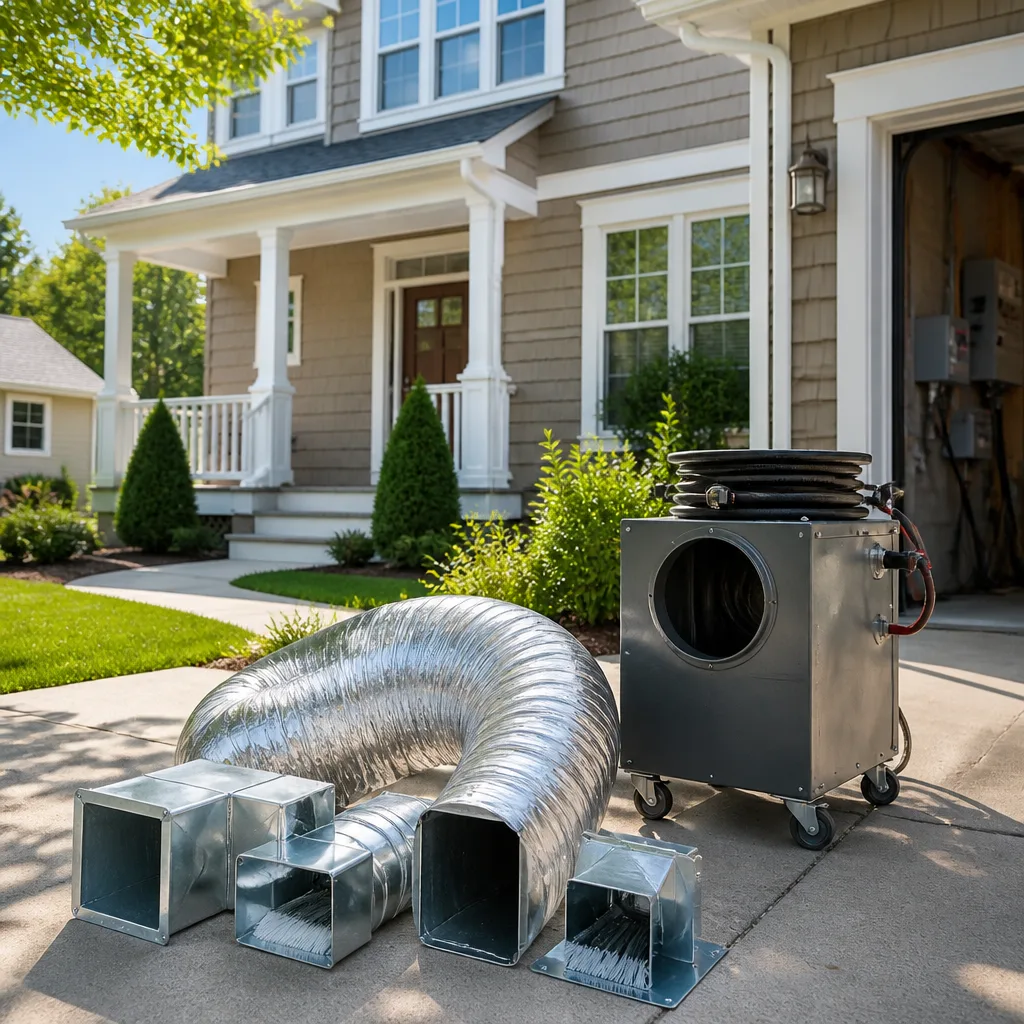 Whole-home duct cleaning
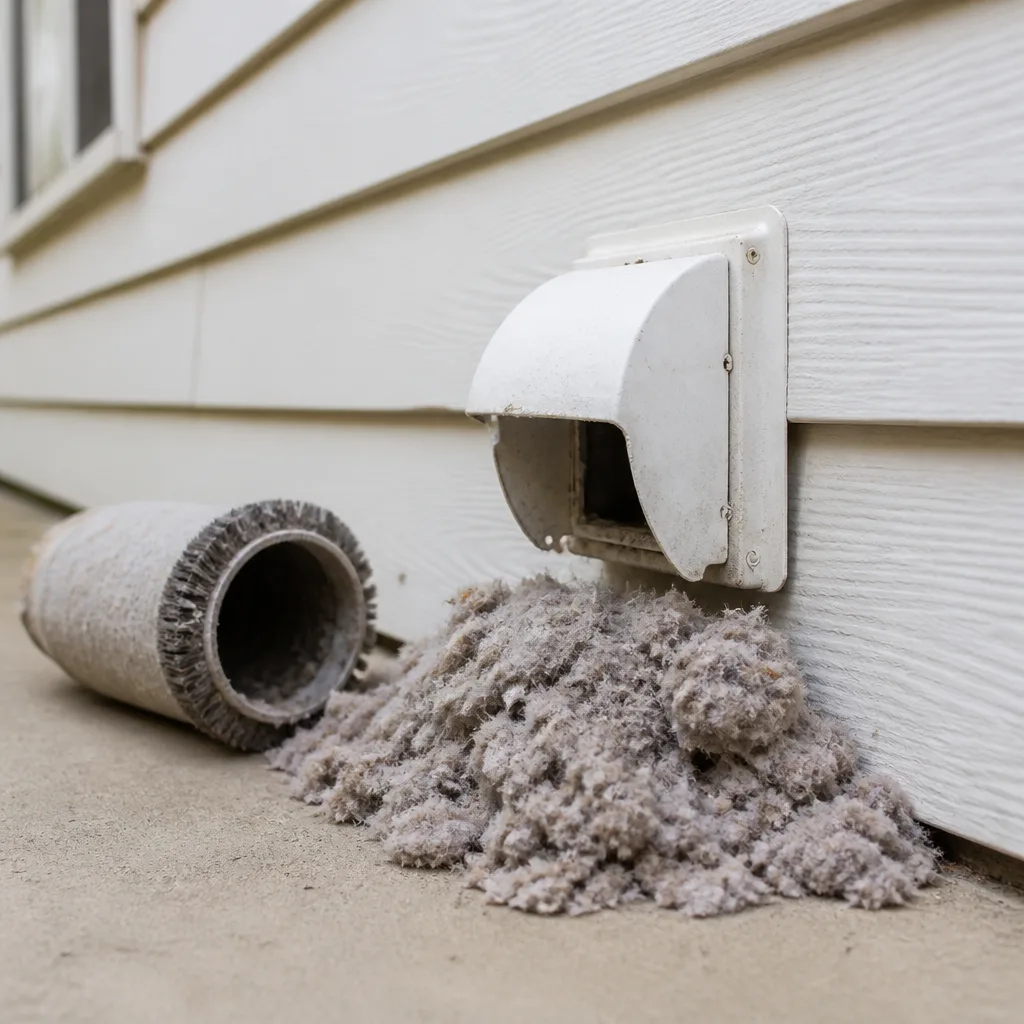 Dryer vent cleaning
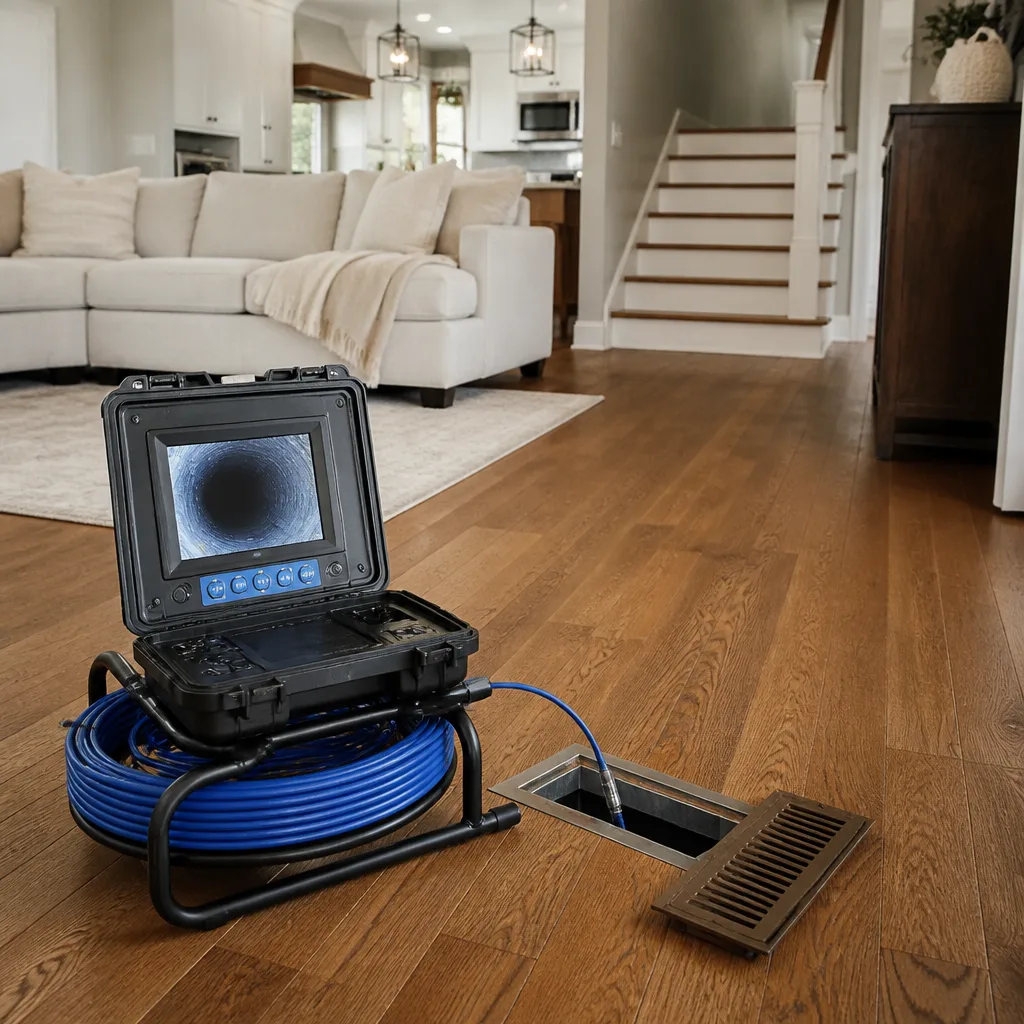 Camera inspection
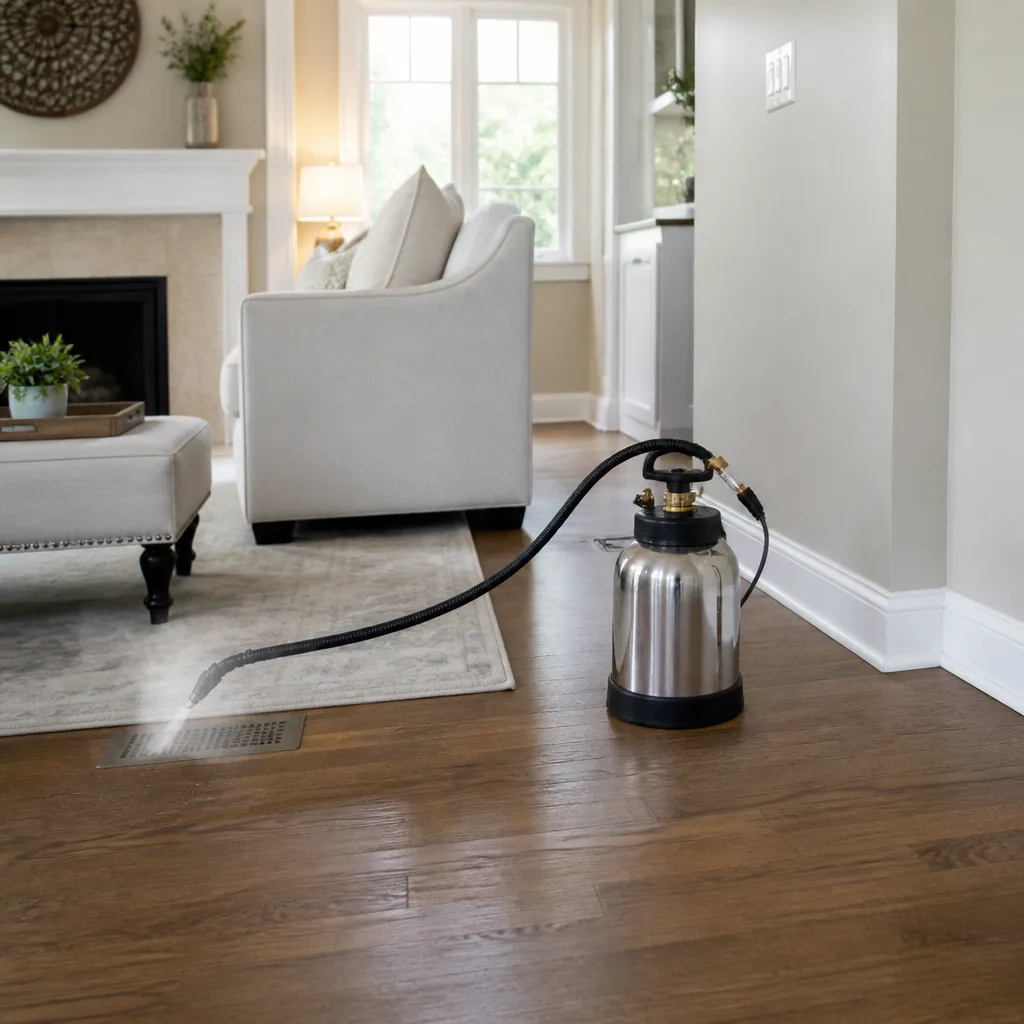 Sanitizing & deodorizing
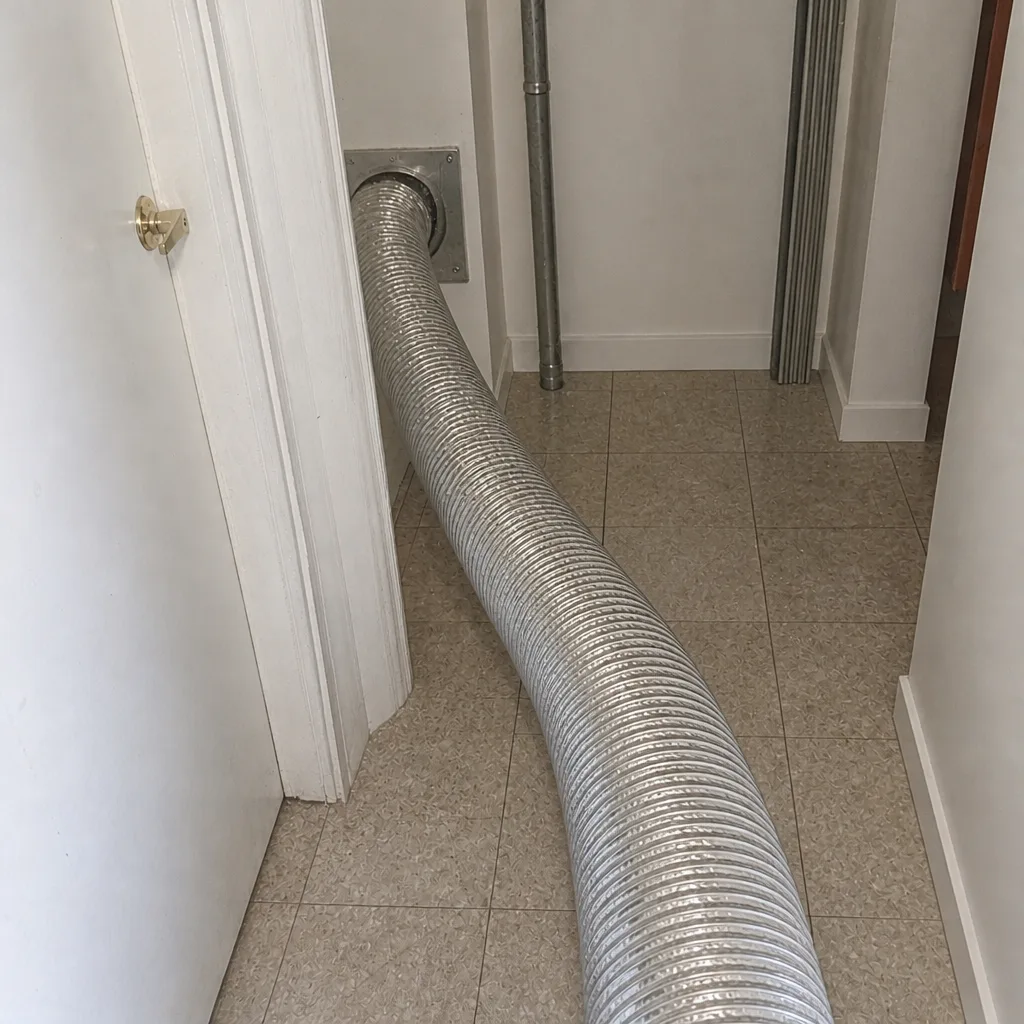
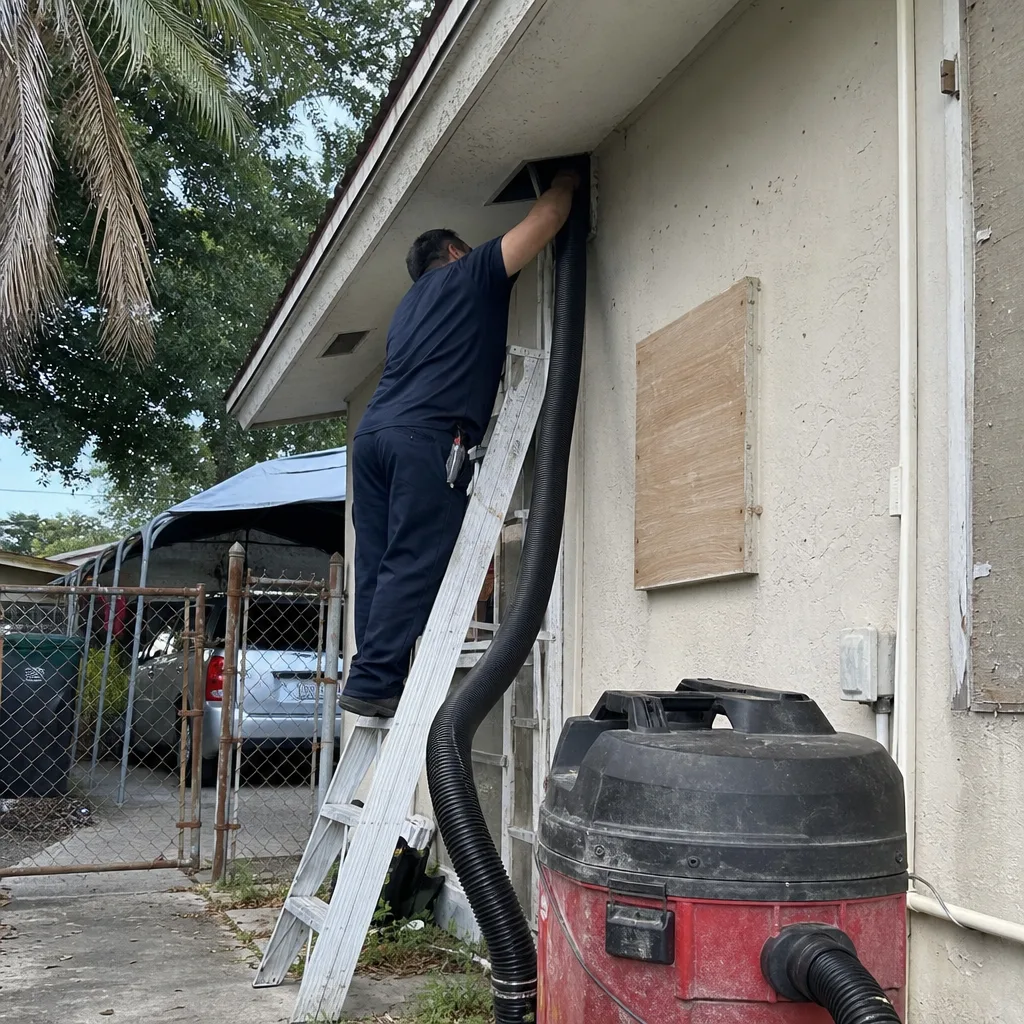
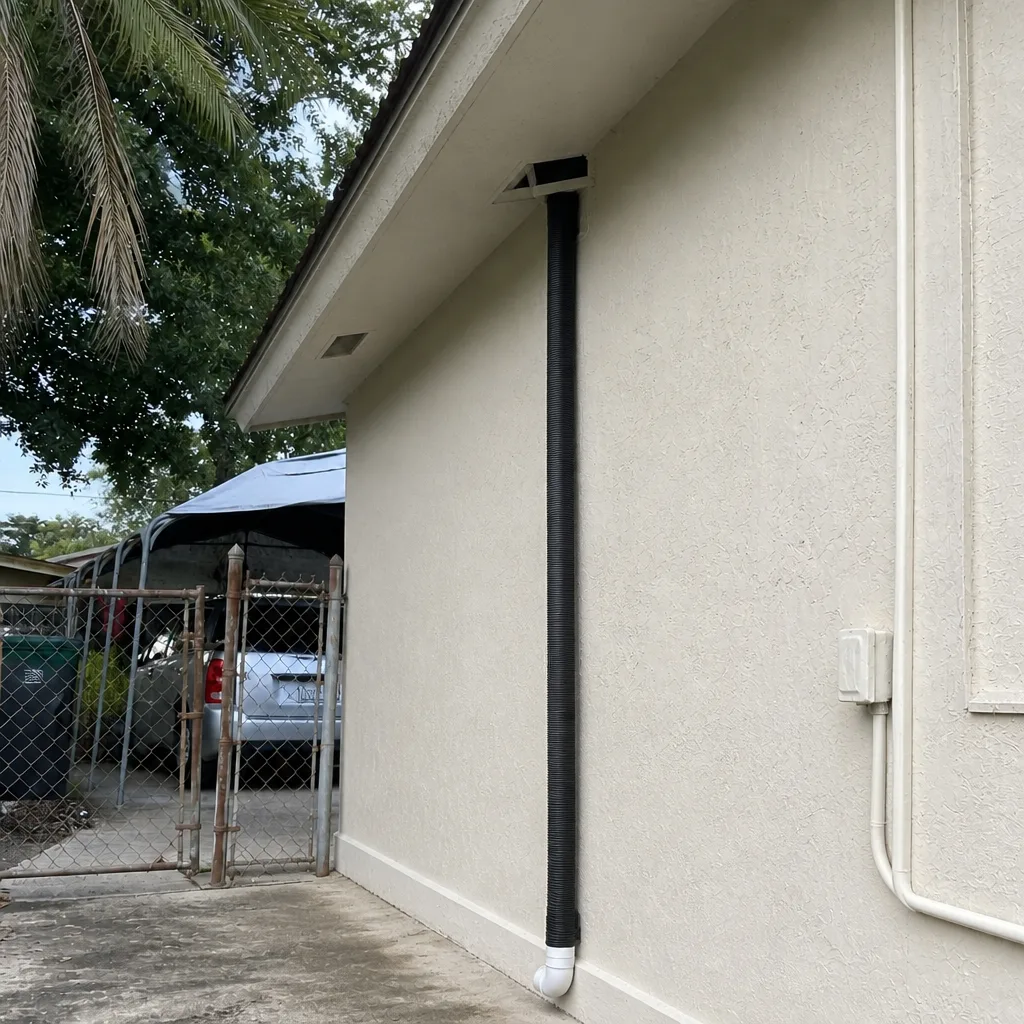
Whole-system duct and dryer vent check with before-and-after photos - you see exactly what came out of your vents
That "$99 whole-house special" is a bait ad - the real number appears once they are in your hallway, or the "clean" is a shop-vac at the register. We photograph the inside of your ducts before and after instead.
How to Hire an Air Duct Cleaning Contractor in Miami Gardens: A Step-by-Step Guide
The most common duct cleaning problem in South Florida isn’t a fake license or a stolen logo. It’s a real company, with real paperwork, that shows up with equipment which physically cannot clean ductwork to a professional standard. A shop vac and a leaf blower will move dust around inside your system. They won’t remove it. The homeowner can’t tell the difference until the work is finished and the invoice is paid.
This guide is built to close that gap. You’ll learn the equipment questions to ask before you book, what acceptable answers sound like, how to read an estimate that was put together properly, and how to put the scope in writing so nobody renegotiates on your driveway. Miami Gardens homeowners deserve a clean that can be verified, not a visit that just feels productive.
Quick Answer
To hire an air duct cleaning contractor in Miami Gardens, verify three things before you book: the specific equipment they’ll use on your system (professional rotary agitation and HEPA-filtered extraction, not a shop vac), whether they’ll inspect your ducts with a camera and map every supply and return, and whether the written estimate lists scope, deliverables, and cleanup responsibilities. A contractor who quotes a whole-house price over the phone without walking your system is guessing. A contractor who can name their equipment and show you how the work will be verified is the one worth hiring.
Styles & brands we work with
- Whole-home duct cleaning
- Dryer vent cleaning
- Camera inspection
- Sanitizing & deodorizing
Table of Contents
- Why Miami Gardens Homeowners Get Burned on Duct Cleaning
- The Equipment Questions to Ask Before You Book
- NADCA Membership, ACR Standards, and What to Actually Verify
- Red Flags Specific to the South Florida Duct Cleaning Market
- What a Legitimate Estimate Process Looks Like
- How to Structure the Contract Before Work Begins
- How to Verify the Work Was Actually Done
- When Cleaning Isn’t Enough: Duct Repair and Dryer Vents
Why Miami Gardens Homeowners Get Burned on Duct Cleaning
Miami Gardens sits in a hot, humid climate where the air conditioning runs hard for most of the year. That long runtime means your duct system is moving air constantly, and every gap, every loose joint, and every poorly sealed connection is pulling attic air, garage air, or wall-cavity air into the supply stream. Ductwork here doesn’t get a seasonal break. It accumulates whatever is in the surrounding air, and it accumulates it faster than systems in milder parts of the country.
That reality creates a crowded market. Legitimate operators compete with low-bid outfits that undercut on price and deliver a surface pass. The homeowner sees a van, a hose, and a technician who spends forty minutes in the house. What they don’t see is whether the vacuum had enough airflow to pull debris out of the far end of a long trunk line, or whether the agitation method actually loosened the contamination bonded to the duct walls.
In our experience, the tell is almost always the same: the price was set before anyone looked at the system. A real assessment takes time. It means counting supply and return runs, checking accessible flex duct for tears, and looking at the air handler and plenum. None of that happens in a phone quote.
Miami Gardens has a wide mix of housing stock, from older single-family homes to newer construction, and each carries different ductwork realities. Older flex duct may be sagging, disconnected in the attic, or crushed behind a soffit. Newer construction often has tighter systems but can carry construction debris left in the ducts. The contractor you hire needs to be able to find those conditions, not just run a hose.
The Equipment Questions to Ask Before You Book
This is the section most homeowners skip, and it’s the one that separates a real clean from a cosmetic one. Ask these questions directly on the phone. A legitimate contractor will answer them without hesitation, and the answers will be specific.
1. Is the vacuum truck-mounted or portable, and what’s the CFM rating?
CFM means cubic feet per minute, the measure of how much air the vacuum moves. Professional-grade extraction systems move substantial airflow, which is what creates the negative pressure needed to pull debris out of the duct run rather than stirring it into the room. A portable unit with low airflow can’t sustain that pull across a long trunk line. Ask for the rating. If you get a vague answer, that’s your answer.
2. What’s the agitation method?
Vacuum alone doesn’t remove contamination bonded to the duct walls. You need mechanical agitation, and the professional standard is a rotary brush system. We use Rotobrush rotary-brush equipment because it’s the platform remediation contractors rely on. Ask whether the contractor uses rotary brushes, compressed-air whips, or something improvised. “We blow it out with air” is not agitation, it’s redistribution.
3. Is the extraction HEPA-filtered?
HEPA filtration matters because the whole point is to capture what you’re removing, not exhaust it back into the living space. We run Nikro HEPA-filtered vacuum equipment for exactly that reason. If a contractor can’t tell you whether their system is HEPA-filtered, the filtration is either absent or unknown to them.
4. What containment do you use?
For heavily contaminated systems or post-construction cleanup, containment keeps dust from migrating through the house during service. We carry Abatement Technologies equipment for that reason. Not every job needs it, but a contractor who doesn’t know what containment means won’t deploy it when it counts.
A short list to run through before you book:
- Vacuum type and CFM rating, stated plainly
- Agitation method, ideally rotary brush
- HEPA filtration: yes or no, and on what equipment
- Containment equipment for contaminated systems
- Whether they offer camera inspection
NADCA Membership, ACR Standards, and What to Actually Verify
NADCA is the National Air Duct Cleaners Association, and its ACR standard (Assessment, Cleaning, and Restoration) is the reference document for how professional duct cleaning should be scoped and performed. Membership is a good starting signal. It is not proof of compliance. Plenty of companies display the logo and still skip the assessment phase that ACR requires.
What ACR actually asks for, in plain terms, is a documented assessment before cleaning begins. That means the contractor inspects the system, identifies the source of any contamination, and determines whether cleaning is even the right response. If a contractor skips straight to a price without an assessment, the ACR process didn’t happen, regardless of what’s on the website.
Ask two questions to verify:
- Will you assess the system before quoting the scope? The answer should be yes, and the assessment should involve looking at the air handler, plenum, and accessible duct runs.
- What happens if you find a condition that cleaning won’t fix? A compliant contractor will tell you, because ACR includes restoration, not just cleaning. A disconnected duct run or a collapsed section needs repair, not another pass with a vacuum.
This is where our three-service scope matters. We clean ducts, we clear dryer vents, and we repair duct systems. Miami Gardens homes frequently have breaches, disconnected flex runs, or crushed sections that a cleaning-only company either ignores or outsources. If the company you hire can’t repair what it finds, you’ll be scheduling a second contractor before the first one’s invoice clears.
Red Flags Specific to the South Florida Duct Cleaning Market
The Miami Gardens market has a few patterns worth naming directly, because they show up again and again.
The “$99 whole house” offer
A whole-house clean at that price can’t cover professional equipment time, labor, and filtration. What happens instead is the price changes once the van is at the house. Either the scope shrinks to a token pass, or add-ons appear. If a price sounds like a loss leader, it is one, and the loss gets recovered from you.
Upsell pressure for “mold treatments” on the first call
Mold remediation is a separate discipline with its own protocols. If a contractor diagnoses a mold problem over the phone before seeing your ducts, they’re selling a service, not assessing one. Ask what they saw, when they saw it, and how they verified it.
No camera inspection offered
Camera inspection lets both parties see the condition of the duct interior before and after. A contractor who never offers it is asking you to take the result on faith. That’s not a clean you can verify.
Quote given without entering the home
Every duct system is different in run count, layout, and access. A price quoted from the driveway is a guess dressed as an estimate.
No written scope
If the deliverables aren’t in writing, they don’t exist. Ask what’s included, what’s excluded, and who cleans up.
If any of these show up, slow down. The inconvenience of rescheduling is small compared to paying for work that has to be redone.
What a Legitimate Estimate Process Looks Like
A real estimate is a walkthrough, not a conversation. Here’s what it should involve, in order.
- System count. The contractor counts supply and return runs so the scope reflects the actual system, not a flat rate.
- Mapping. Supply and return mapping means identifying where each run goes and how the trunk lines connect. This is how a contractor finds dead-end runs and leaks.
- Air handler and plenum inspection. The source of contamination is often here, not in the branch ducts.
- Access check. The contractor confirms access points and identifies any run that needs a new access cut.
- Written scope. You get a document listing what will be cleaned, how, and what happens to debris.
- Price agreed before work starts. One price per system, agreed in writing, before any equipment comes off the truck.
We use this process because it’s the only way to know what you’re buying. Our price is set per system by the written estimate, agreed before work begins. No per-vent pricing games. No surprise line items once the hose is in.
For a broader look at what the service involves, our air duct cleaning page walks through the process start to finish.
How to Structure the Contract Before Work Begins
Put the following in writing. A contractor who resists this is telling you something useful.
- Scope of work. Number of supply and return runs covered, whether the air handler and plenum are included, and whether access cuts are part of the price.
- Equipment specified. The equipment to be used, named. This is your protection against a shop vac showing up.
- Deliverables. Before-and-after photos of your own ducts, taken during the job. This is how you verify the work happened.
- Cleanup responsibilities. Who protects floors and furnishings, and who removes debris from the property.
- Post-service verification. What the contractor will show you at completion, and what happens if you find an issue afterward.
- Price. One agreed figure per system, with the final price set by the written estimate.
The before-and-after photos point deserves emphasis. Duct interiors are invisible without a camera, and that invisibility is what low-bid operators depend on. Photos of your ducts, not stock images, are the difference between a claim and evidence.
Ask also whether the crew uses surface protection during service. We use Guardsman-line products during and after service to protect surfaces and materials, because a thorough clean shouldn’t cost you a scratched floor or a marked wall.
How to Verify the Work Was Actually Done
Verification starts before the crew leaves. Ask to see the before-and-after photos while they’re still on site. If something looks wrong, the time to raise it is before the truck pulls away.
Then check a few basics:
- Are the access panels and registers properly reinstalled and sealed?
- Is there dust on surfaces near the return grilles, which would suggest inadequate containment?
- Did the crew document the number of runs actually cleaned against the agreed scope?
- Is there any new vibration or airflow change you notice at the registers?
A thorough clean should show a visible difference in the duct interior. It should also leave your home roughly as clean as it was found. If either isn’t true, call the company and ask. Reputable operators expect that call.
For a broader view of the company behind this guide, see Oasis Air Duct.
When Cleaning Isn’t Enough: Duct Repair and Dryer Vents
Cleaning treats contamination. It doesn’t fix a disconnected run, a collapsed section of flex duct, or a breached joint pulling attic air into your supply stream. Those conditions need repair, and cleaning around them is wasted effort. In Miami Gardens attics, flex duct that has been exposed to years of heat can sag, crush, or separate entirely. We find these conditions during assessment, and we repair them rather than working around them.
Dryer vent cleaning is a separate, safety-critical service. Lint accumulation in a dryer vent restricts airflow and raises fire risk, and it’s one of the most commonly deferred maintenance items in a home. It’s not an upsell to tack onto a duct job. It’s a distinct concern that deserves its own assessment. We treat it that way.
Whole-home air quality systems are the other side of this. We partner with Honeywell and Aprilaire, which lets us recommend and integrate filtration and ventilation into a home rather than stopping at the cleaning visit. If your ducts are clean but your filtration is inadequate, the next round of contamination builds right back up. For more on the vent side of the system, our dryer vent cleaning page covers what the service involves and why it matters.
Common Mistakes to Avoid
- Booking a low price without asking about equipment. The price tells you what the job costs. The equipment tells you what the job is. Always ask about both.
- Accepting a quote given over the phone. A contractor who prices your system without seeing it is guessing, and the guess rarely favors you.
- Skipping the before-and-after photos. Duct interiors are invisible without a camera. Without photos of your own ducts, you have no way to verify the work was done to scope.
- Confusing NADCA membership with ACR compliance. The logo is a signal, not proof. Ask whether the assessment phase actually happens before cleaning begins.
- Hiring a cleaning-only company in a market full of duct defects. Miami Gardens attics routinely produce disconnected and crushed runs. A cleaning-only contractor finds them and can’t fix them.
- Treating dryer vent cleaning as an optional add-on. It’s a separate safety concern and deserves its own visit, not ten extra minutes at the end of a duct job.
- Not requiring cleanup responsibilities in writing. Who protects your floors and removes debris is a contract term, not a favor.
See the difference
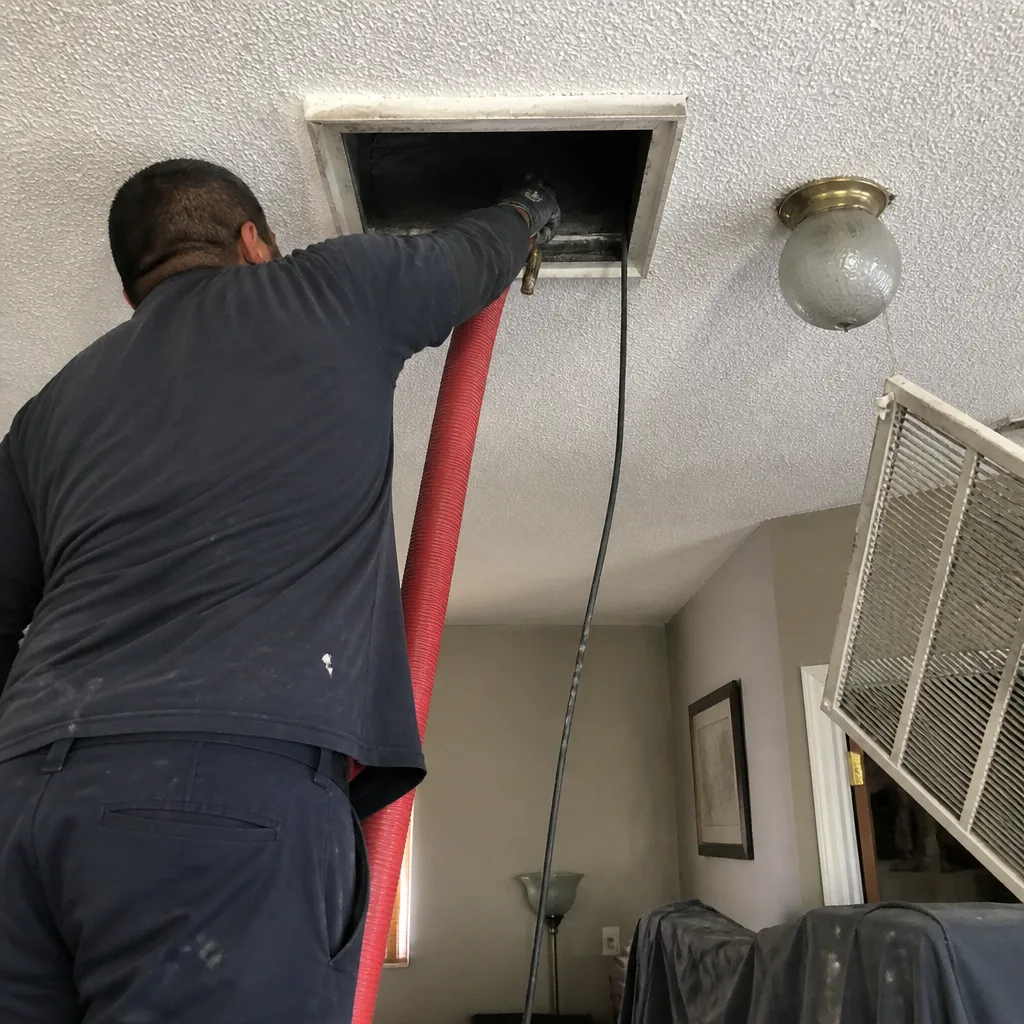 Before
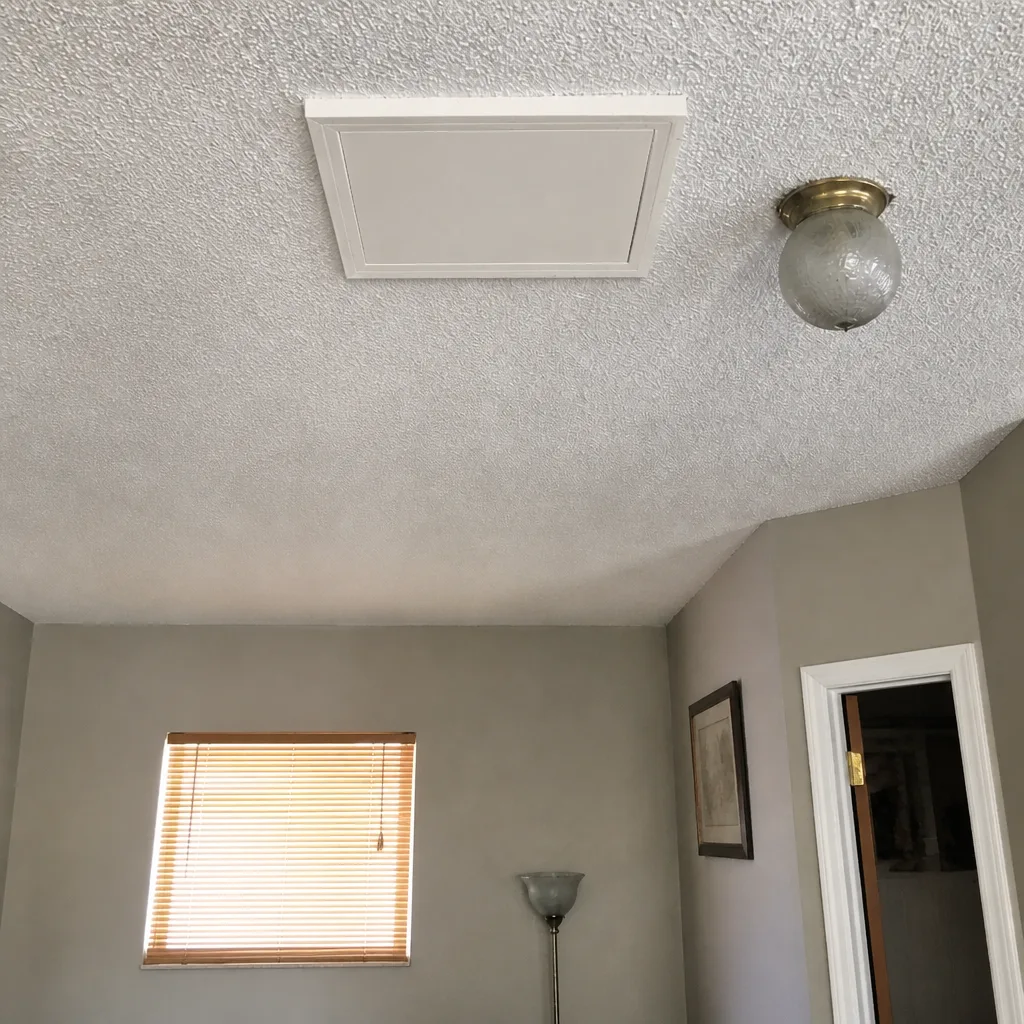 After
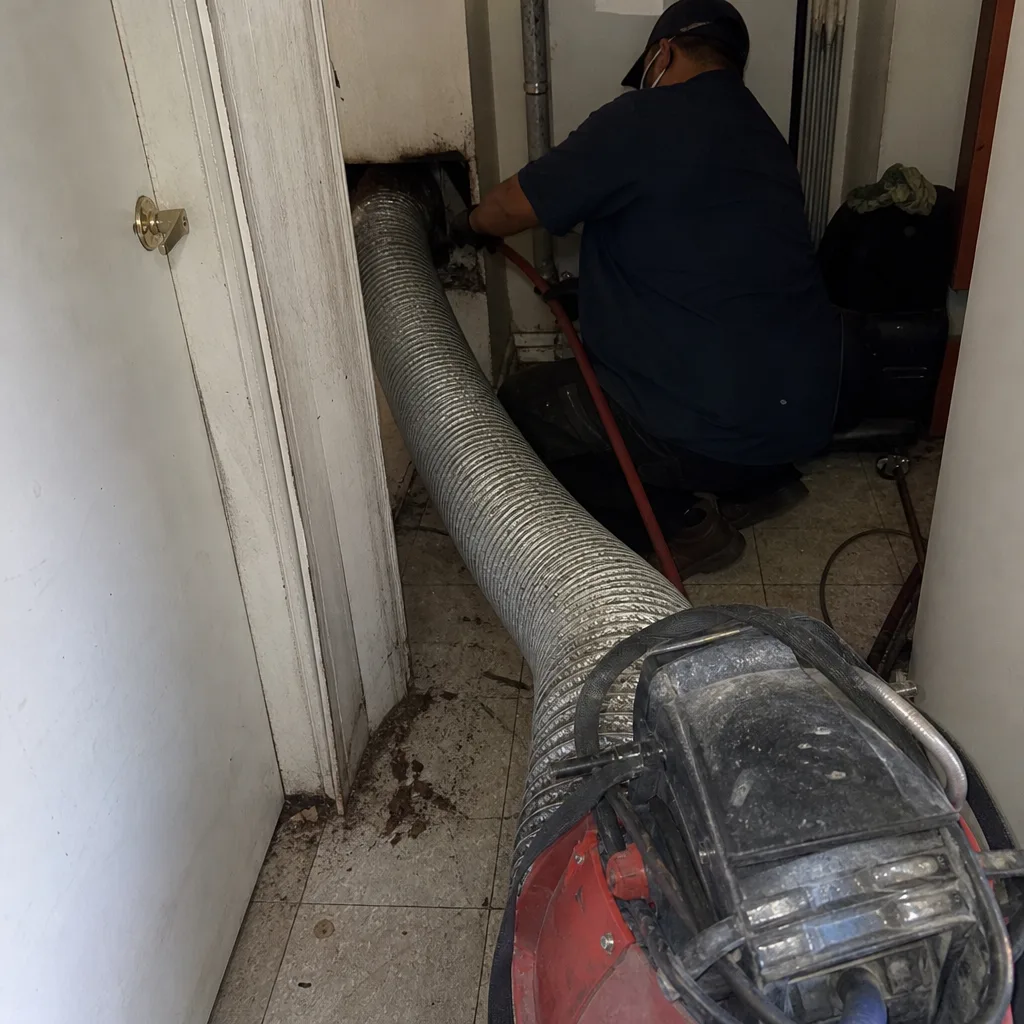 Before
 After
 Before
 After
When to Call a Professional
Call a professional when you notice visible dust streaking around registers, a musty smell that returns after cleaning the filters, inconsistent airflow between rooms, or a dryer that takes longer than it used to finish a load. New homeowners should call before trusting a system they inherited. Call if anyone in the household has respiratory sensitivity and you don’t know the history of the ductwork. Call if you see disconnected or crushed flex duct in the attic, because cleaning around a breach solves nothing. And call if you’ve hired before and weren’t shown before-and-after photos, because that’s a job that needs verifying or redoing.
Oasis Air Duct offers free estimates in Miami Gardens. Call (833) 384-3692. We answer 24/7. Fast dispatch from 7am to 7pm, Sunday through Friday. Our price is set per system by the written estimate, agreed before work begins.
Frequently Asked Questions
Pricing in Miami Gardens depends on the number of supply and return runs, the condition of the system, and whether repair is needed. We set one price per system by written estimate after we’ve seen the system, so the number reflects your actual ductwork rather than a flat rate. We don’t quote per vent, and we don’t use teaser pricing. Call (833) 384-3692 for an exact quote. Estimates are free.
Because they’re buying a different service. A low quote usually reflects consumer-grade equipment, no camera inspection, and a scope that doesn’t match your system. The cheap price holds right up until the work needs to be redone, at which point you’ve paid twice. Ask about equipment and scope before you compare prices.
Before-and-after photos of your own ducts, taken during the job, and a documented count of runs cleaned against the agreed scope. Ask to see the photos before the crew leaves. If a contractor can’t show you the interior of your ducts, you’re being asked to take the result on faith.
It depends on the home, not a calendar. New construction, recent renovation, pets, and visible contamination at the registers are all reasons to assess sooner. Homes with no obvious signs and a well-sealed system can go longer. Assessment is the honest answer, and it’s what a professional should offer before quoting a scope.
There’s no single certification that makes a contractor legitimate on its own. NADCA membership is a useful signal, but what matters is whether the contractor actually follows the ACR process: assessment first, then a written scope, then cleaning, and finally verification. Ask about the process, not just the badge.
Then cleaning alone won’t solve it. Disconnected, collapsed, or breached runs need repair before or alongside cleaning, which is why we offer duct repair as part of our scope. If the company you hire can’t do that work, you’ll need a second contractor. Call (833) 384-3692 and we’ll assess the system and tell you honestly what it needs.
The Bottom Line
Hiring a duct cleaning contractor in Miami Gardens comes down to three things: equipment, process, and verification. Ask what equipment will be used and whether it’s professional-grade with genuine HEPA filtration and rotary agitation. Ask whether the system will be assessed and mapped before a price is quoted. And require before-and-after photos of your own ducts so the result can be checked, not assumed. A contractor who answers all three clearly and puts the scope in writing is worth hiring. One who can’t is selling you a visit, not a clean. Oasis Air Duct serves Miami Gardens with professional equipment on every job, one agreed price per system, and photos of your own duct interior before and after.
Ready to have your system assessed properly? Call (833) 384-3692 for a free estimate. We answer 24/7. Fast dispatch from 7am to 7pm, Sunday through Friday. We clean it. We repair it. We clear it. Oasis Air Duct has served Miami Gardens since 2013.
Written by the team at Oasis Air Duct, serving Miami Gardens since 2013.