
Last updated November 14, 2026
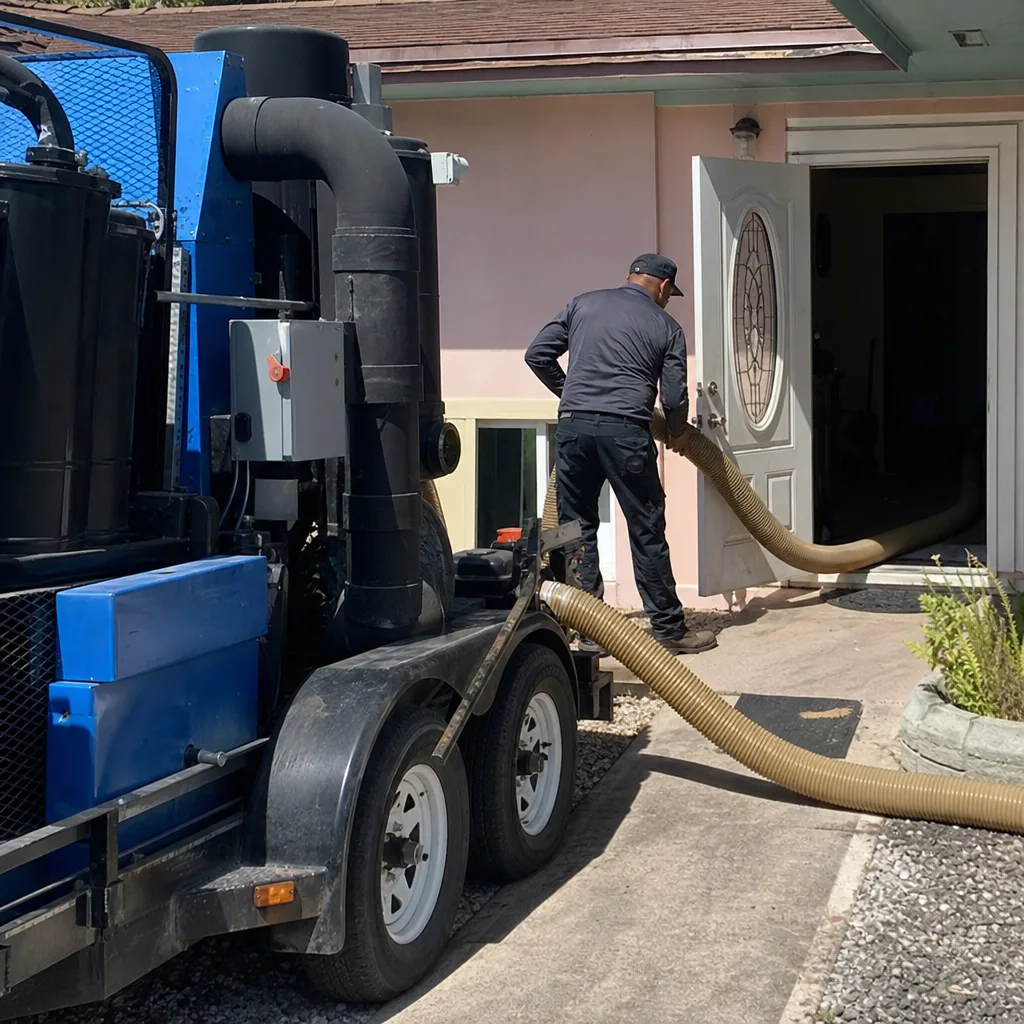
 Whole-home duct cleaning
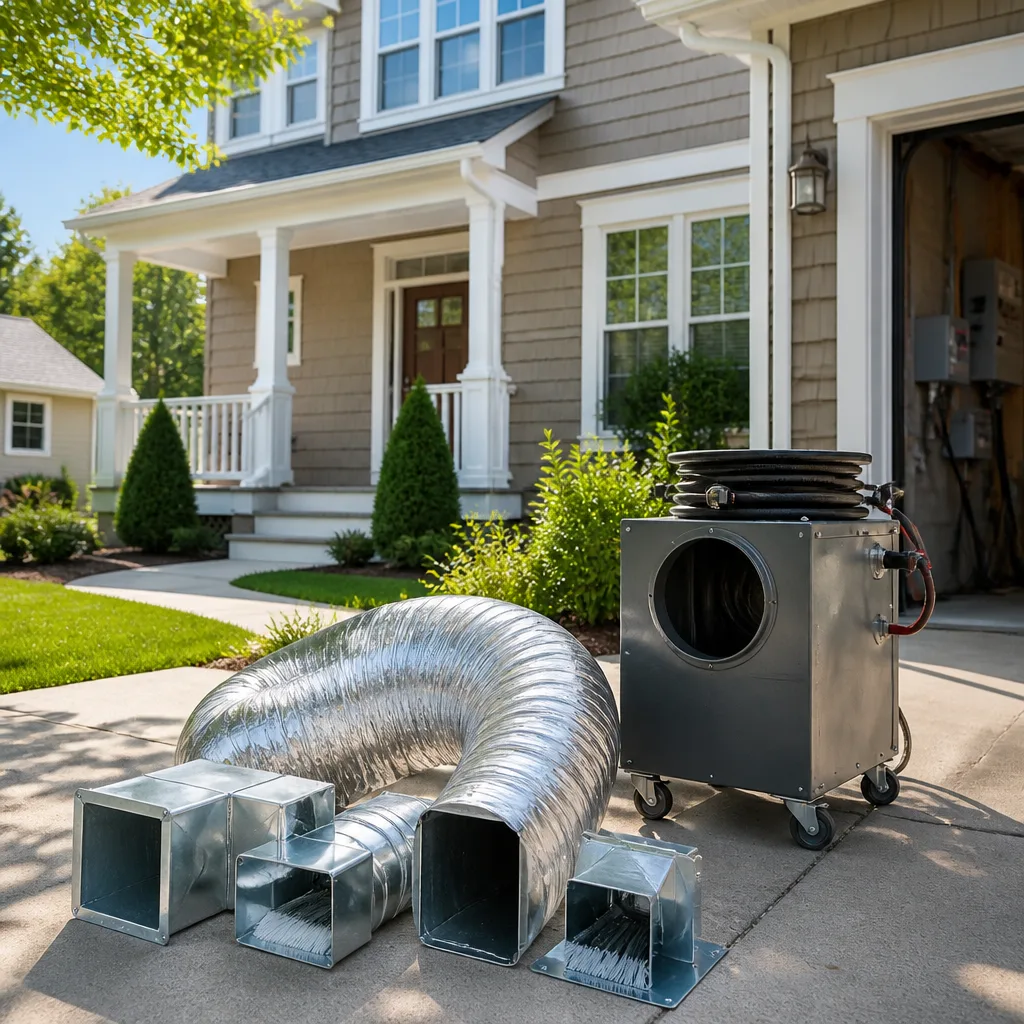
 Dryer vent cleaning
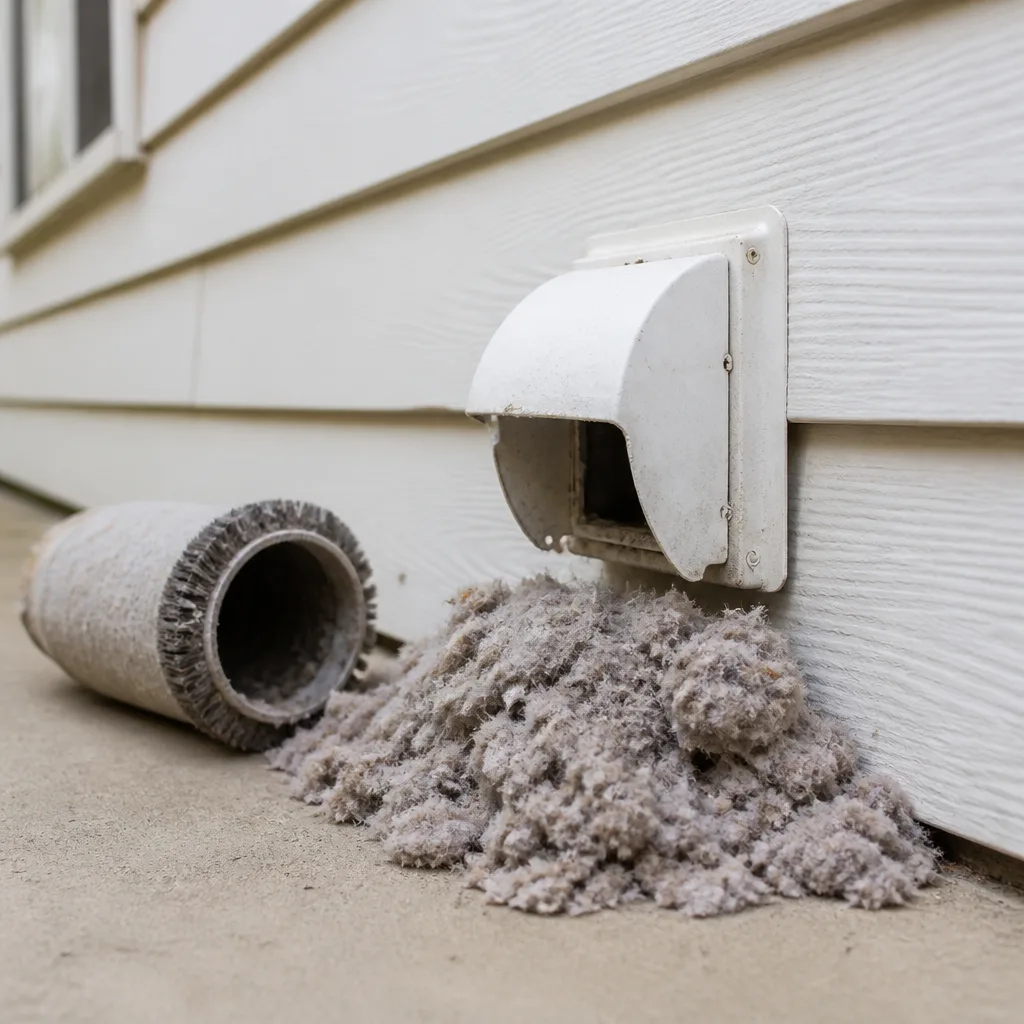
 Camera inspection
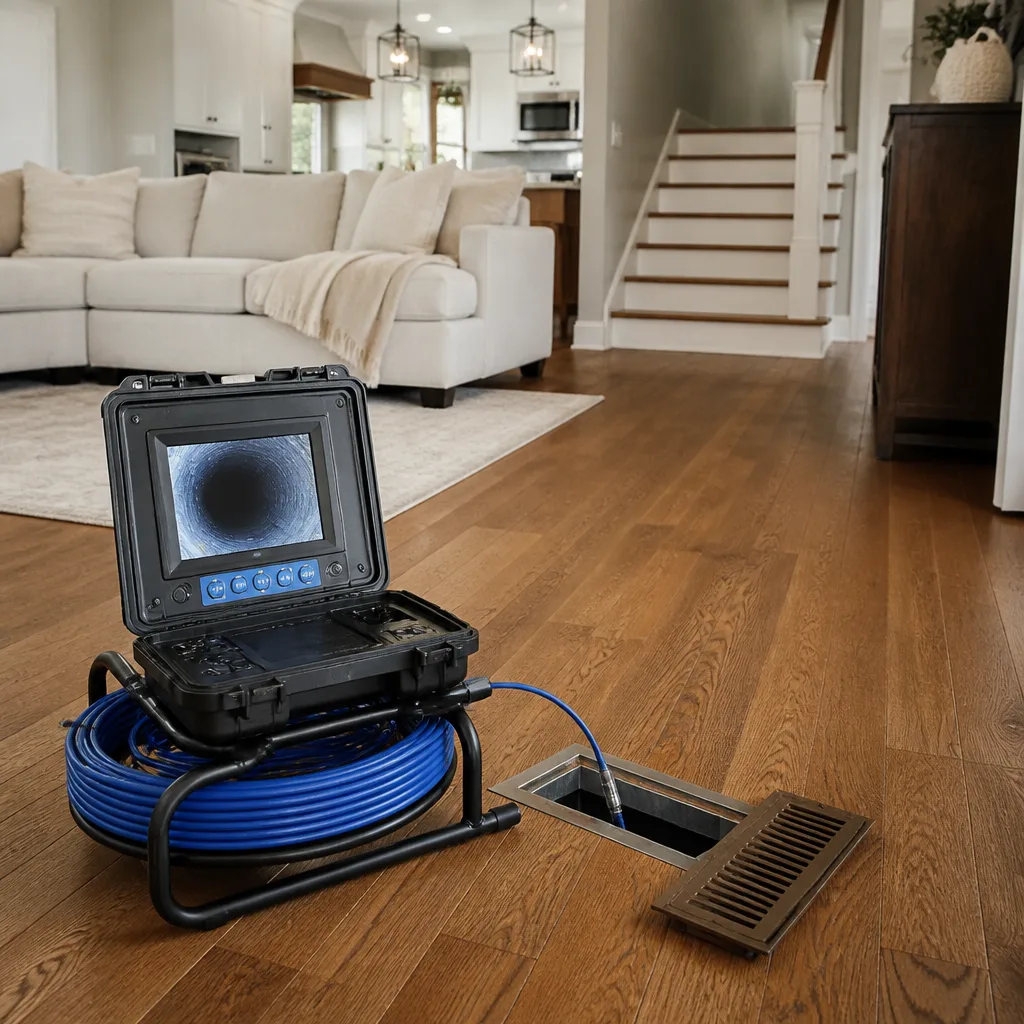
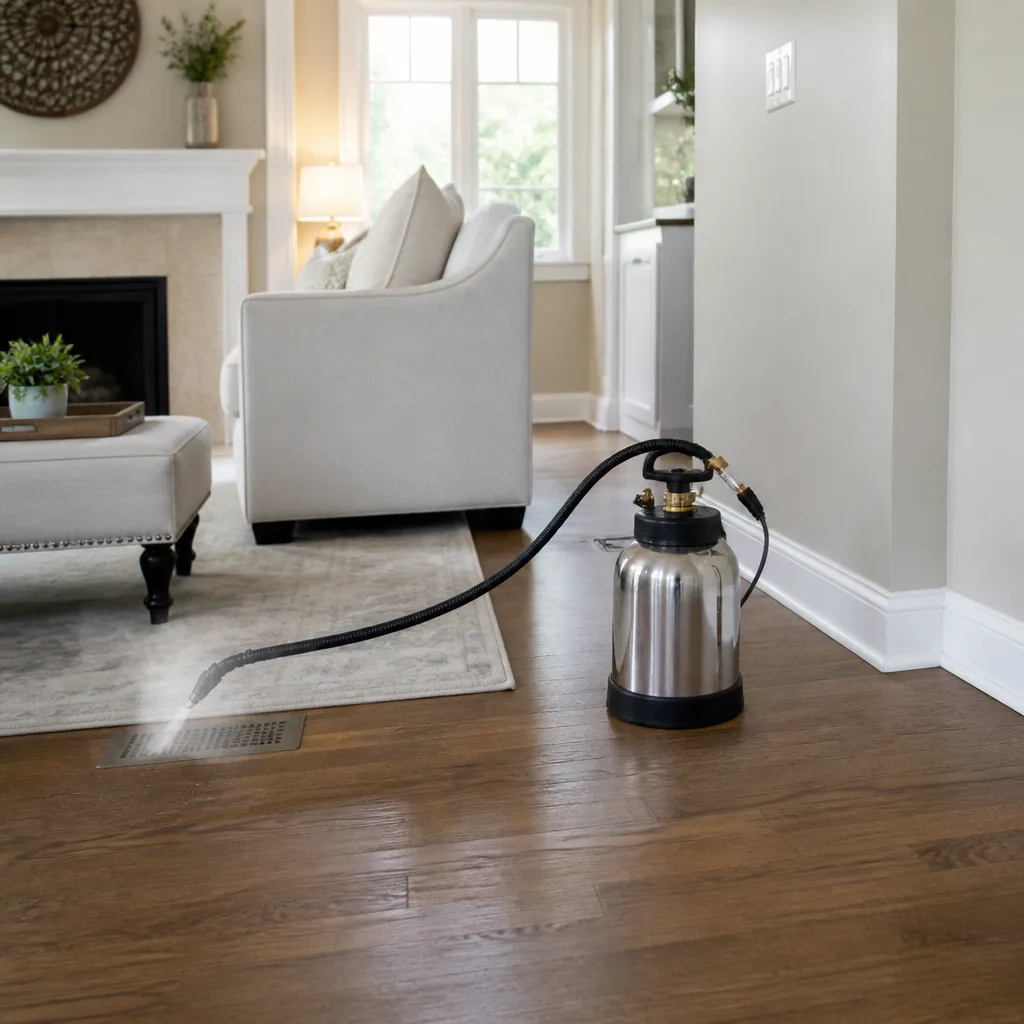 Sanitizing & deodorizing
Whole-system duct and dryer vent check with before-and-after photos - you see exactly what came out of your vents
That "$99 whole-house special" is a bait ad - the real number appears once they are in your hallway, or the "clean" is a shop-vac at the register. We photograph the inside of your ducts before and after instead.
Air Duct Cleaning Maintenance Schedule: What to Do and When
The most repeated piece of duct cleaning advice in America is a cleaning every three to five years, and that number was built for homes with a real off-season. Miami Gardens doesn’t have one. Air conditioners here run virtually every day of the year, pulling air through the same ducts for months on end, and a schedule copied from a national checklist will let your system run two to three cycles past due before the calendar tells you to call. This guide walks through what a Miami Gardens maintenance schedule actually looks like: how often, which months are best for an appointment, what you can do between professional cleanings, and how to document a baseline so the next decision is factual rather than guesswork.
Quick Answer
For most Miami Gardens homes, air ducts should be professionally cleaned every 2 to 3 years rather than the 3 to 5 years a national guideline suggests, because year-round AC operation exposes the system to far more airflow than a seasonal climate does. Homes with pets, smokers, recent renovation dust, or older flex duct should aim closer to every 2 years, and any system showing visible dust at the registers, a musty smell, or heavy buildup near the air handler should be assessed sooner.
Styles & brands we work with
- Whole-home duct cleaning
- Dryer vent cleaning
- Camera inspection
- Sanitizing & deodorizing
Table of Contents
- Why the National 3-to-5-Year Rule Doesn’t Fit Miami Gardens
- The Maintenance Matrix: Cleaning Intervals by Home Variable
- The Best Times of Year to Schedule in Miami Gardens
- What You Can Do Between Professional Cleanings
- What Home Maintenance Cannot Replace
- How to Set a Documentation Baseline After a Clean
- Signs Your Ducts Are Due Before the Calendar Says So
- Common Mistakes to Avoid
Why the National 3-to-5-Year Rule Doesn’t Fit Miami Gardens
The widely cited cleaning interval of every 3 to 5 years assumes a home where the air handling system idles for a good part of the year, and where windows are open during the mild months. Neither is true in South Florida. Most Miami Gardens homes run their AC nearly every day of the year, and much of the air moving through the ductwork is recirculated interior air that has already picked up dust, pollen, pet hair, and cooking particles. The longer the system operates, the more of that material deposits on duct interior surfaces.
You can estimate your home’s relative exposure with a simple cycle calculation, not a precise number but a sense of scale. Multiply the number of days the system runs per year by the average hours it runs per day. A home where the air conditioner runs 330 days a year at roughly 8 hours a day is putting over 2,600 runtime hours of airflow through its ducts annually. A seasonal climate home might see half that. When consideration for that extra runtime is factored against the national interval, the practical result is that Miami Gardens ducts accumulate at a rate that makes a 3-to-5-year schedule too optimistic.
Construction density adds a second layer. Miami Gardens and the surrounding Broward-to-Miami corridor see continuous residential renovation, roadwork, and new development, and fine construction dust travels in through open doors, windows during cooler evening hours, and the return-air side of the HVAC system itself. A home near active construction should treat that as a temporary reason to shorten its interval. Our experience is that Miami Gardens homes with recent renovation in the neighborhood tend to look overdue within a single 2-to-3-year cycle rather than the 3-to-5 the generic number predicts.
The Maintenance Matrix: Cleaning Intervals by Home Variable
Every home’s schedule starts from a base interval and then adjusts. In Miami Gardens, we start the conversation around every 2 to 3 years for a typical home and modify from there. The variables below matter most:
| Home Variable | Recommended Interval | Why It Shifts |
|---|---|---|
| Standard home, no pets, no renovation | Every 2 to 3 years | Baseline for year-round AC runtime in Miami Gardens |
| One or more pets | Every 2 years, sometimes sooner | Pet dander and hair are lighter than dust and stay airborne longer, so more of it deposits inside the duct |
| Smoker in the home | Every 1 to 2 years | Smoke residue clings to duct surfaces and cannot be fully cleared by cleaning the registers alone |
| Recent renovation or new construction nearby | Assess after the project ends | Construction dust is fine, travels far, and settles throughout the system |
| Duct system older than roughly 15 years | Every 2 years, plus an inspection | Older flex duct can sag, tear, or disconnect, and cleaning prompts a repair check |
| Mostly flex duct | Every 2 to 3 years, with visual checks each year | Flex duct has ridges that trap material, and runs can loosen at joints over time |
| Mostly hard (sheet metal) duct | Every 3 years | Hard duct is smoother and easier to clean thoroughly, so intervals can stretch slightly |
| Children with allergies or asthma in the home | Every 2 years | Particulate levels matter more when the home’s occupants are sensitive |
Flex duct versus hard duct is worth knowing before you call anyone. If your ducts are the flexible plastic-wrapped type, the ridges inside give particulates more surface to settle on, and older flex runs can develop looseness at the connections. If they’re sheet metal, the interior is smoother. Either type cleans well with professional rotary-brush equipment, but the schedule should reflect which you have. Older, sagging flex is one of the most common reasons we find a duct that’s due for cleaning is also due for an air duct repair at the same time.
The Best Times of Year to Schedule in Miami Gardens
In a climate where the AC runs year-round, there are still two schedule windows in Miami Gardens that make more sense than others:
- The weeks after hurricane season ends (roughly mid-November through December). Wind-borne dust and debris stirred up by storm season settle into the system, and clearing them before the next year of heavy runtime keeps the duct interior as clean as possible going into spring. This is also the time to check that the outdoor unit and any attic duct runs survived the season without visible damage.
- The pre-summer humidity peak (roughly April through early May). Getting a cleaning done before the summer months means the system runs its most demanding season with a clean interior and, if you choose a filter upgrade, the best filtration it will have all year. Many Miami Gardens homeowners tell us they want the system in peak condition before the first long hot stretch, and this window delivers that.
Two other timing considerations worth knowing. First, schedule the cleaning after, not during, any home renovation, so the construction dust is captured in the cleaning rather than reintroduced to a freshly cleaned system. Second, if you’re installing new filtration or ventilation equipment, coordinate the cleaning first: a professional cleaning and assessment lets us recommend whether a Honeywell or Aprilaire whole-home solution makes sense for the system you have, rather than adding filtration to a duct system still loaded with debris.
Pricing for a cleaning in Miami Gardens typically depends on the number of systems, the duct type, and the level of contamination, not on the month. There’s no reason to wait for a slow season to get a better price; the estimate is based on what’s in front of us. Call (833) 384-3692 for a free estimate whenever it fits your calendar.
What You Can Do Between Professional Cleanings
A good maintenance schedule is not just professional visits. A handful of simple tasks keep the system in better shape between cleanings and give you real information when the next visit comes around:
- Wipe down the supply registers. Dust on the face of a register is often the first visible sign of buildup. A damp cloth on the grille, with the system off, is easy and doesn’t require tools.
- Track your filter changes. Write the date on the filter frame or keep a small note on the air handler. In Miami Gardens, with the system running most days of the year, filter changes tend to come more frequently than the “every three months” label suggests. A clogged filter is the single most common thing we find on arrival, and it forces the blower to work harder while letting more dust bypass into the ducts.
- Do a visual check of every accessible register. Open the return-air grille occasionally and look inside. Light general dustiness is normal; what you don’t want to see is heavy buildup on the duct wall, torn flex duct, or a run that has pulled away from its fitting.
- Check for disconnected runs. If air feels weaker at one register than others, note which one. A disconnected duct is a common cause and a reason to call for a repair assessment.
- Watch for moisture or musty smells. If a register smells musty when the system turns on, note it before the cleaning so we can check for a moisture source rather than cleaning over a problem.
These tasks take minutes, cost almost nothing, and put you in a better position to judge whether the next cleaning is early or overdue. Where they cannot help is the interior of the duct walls and the plenum near the air handler. That’s a job for equipment with enough vacuum pressure and agitation to actually lift the material.
What Home Maintenance Cannot Replace
Homeowner upkeep is valuable but has a real ceiling. Three things it cannot do:
It cannot reach the duct interior. A vacuum with a flexible crevice tool from a hardware store can draw dust out of the register opening, but it has no way to lift material that has bonded to duct walls. Professional rotary-brush equipment from Rotobrush is designed to agitate the duct surface while HEPA-filtered vacuum equipment from Nikro captures the dislodged material at the source. A shop-vac cannot create that level of negative pressure, and running one near a register without proper HEPA filtration can push dust back into the room.
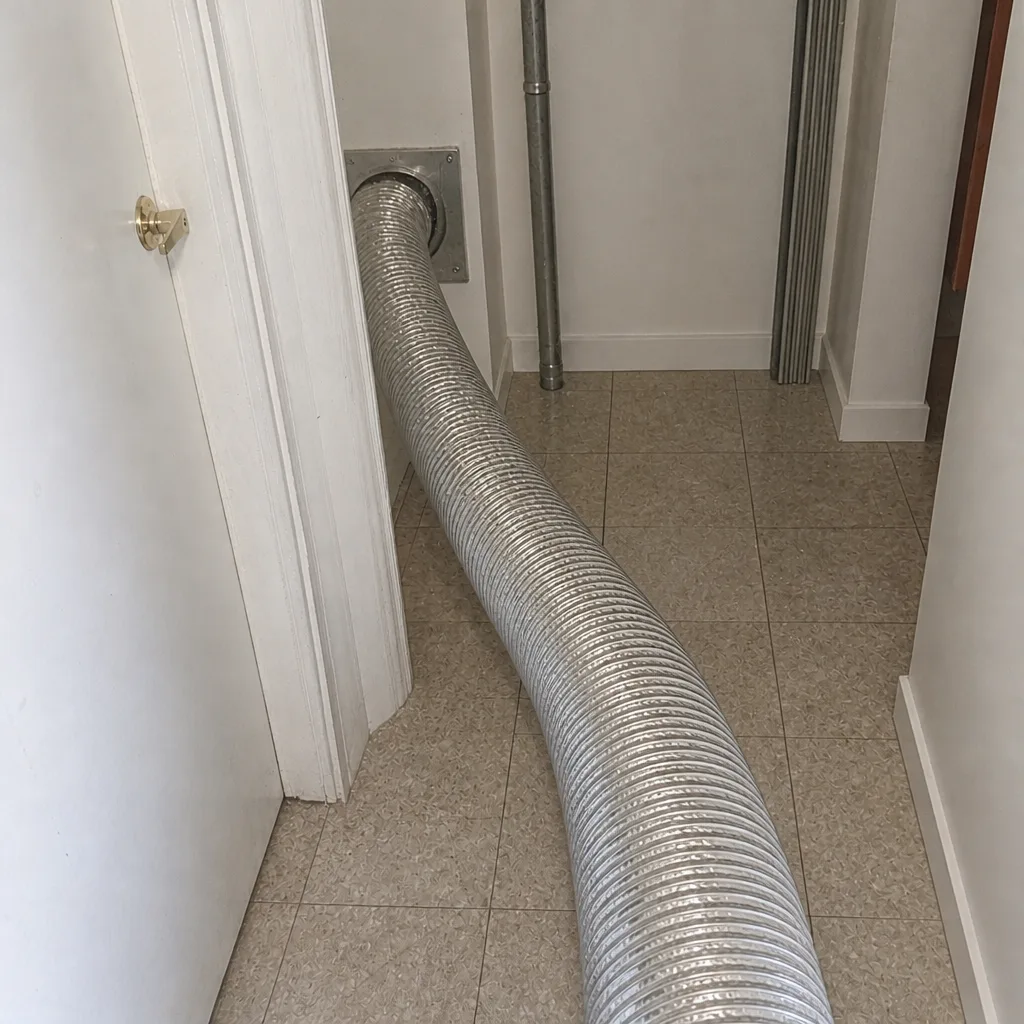
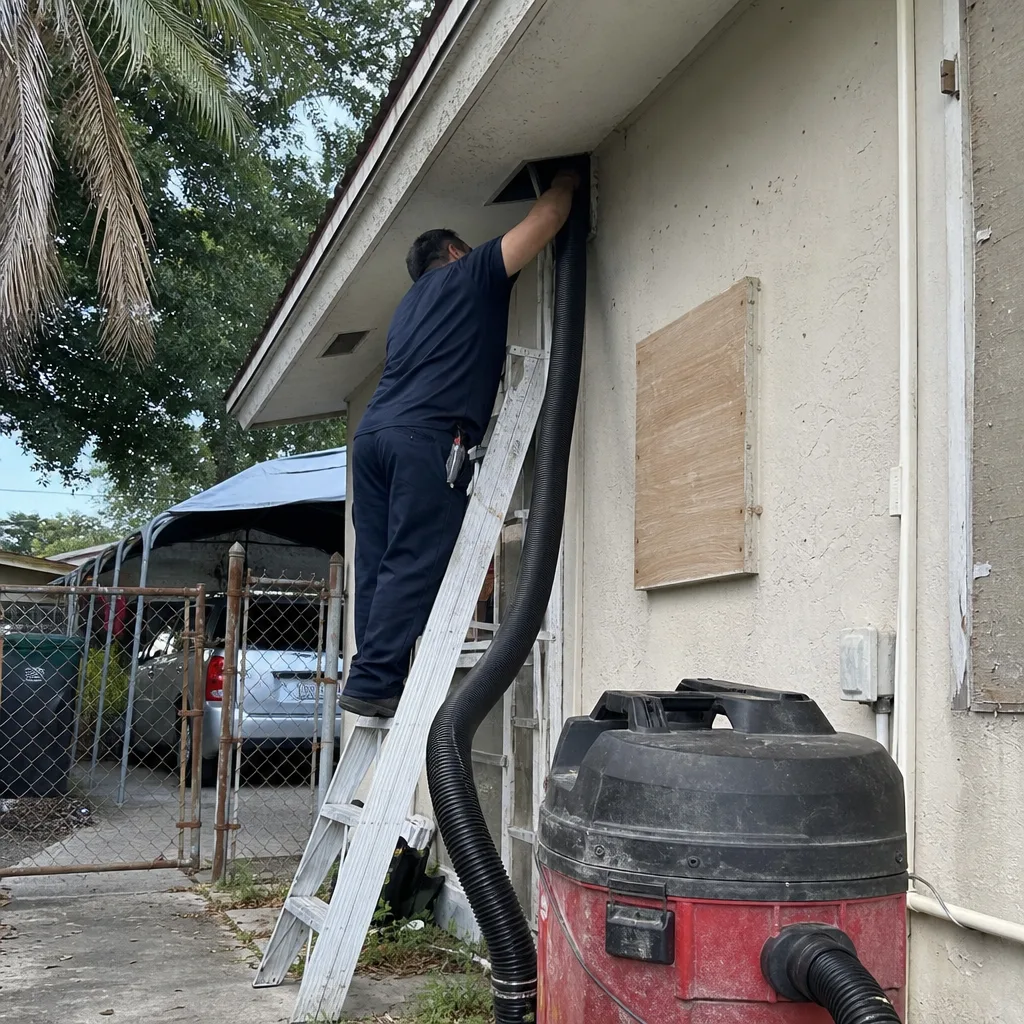
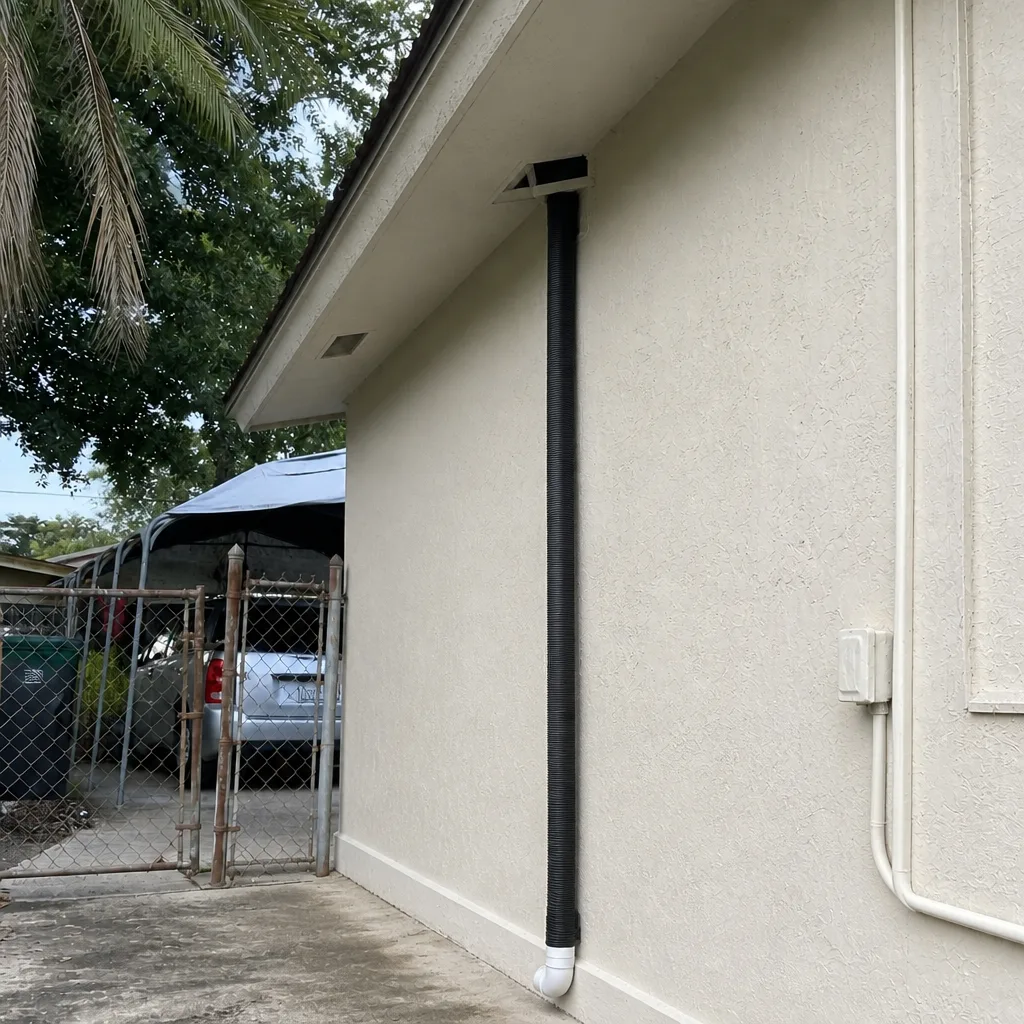
It cannot verify what’s actually been cleaned. When we finish a job, the customer can see before-and-after photos of their own ductwork. That’s not marketing: it’s how you know the work was done and how you set a documentation baseline for future appointments. A homeowner wiping down registers isn’t capturing that record.
It cannot catch hidden damage. A loose joint, a crushed section, or a disconnected run in an attic recess is invisible from the register, and the symptoms (weak airflow, uneven cooling) can be blamed on the air handler when the problem is actually in the duct. A professional cleaning on a Miami Gardens home includes an assessment of the whole system, which is when we find and can repair issues that a maintenance schedule alone would miss.
For heavily contaminated or post-construction ductwork, the difference is even larger. That’s where Abatement Technologies filtration equipment comes in: it lets us contain material during cleaning rather than letting it migrate into the living space, which matters most in the messiest jobs.
How to Set a Documentation Baseline After a Clean
The single best thing you can do after a professional cleaning is establish a documented baseline. This is how you objectively judge next time whether the schedule was early, on time, or overdue. Steps work like this:
- Ask for photos. Before-and-after photos of your ducts, taken inside the system. Keep them in a folder with the date.
- Note the system details. Write down the number of systems, your duct type (flex, hard, or mixed), the filter size and brand you’re using, and the date of the cleaning.
- Record the filter change date. If the filter was replaced during the service, note the date. Then keep tracking changes so you know how long a filter lasts in your home, which varies widely by household.
- Note any repairs or improvements. If a loose joint was reconnected or a tear in flex was repaired during the visit, document it. That record tells the next technician (or you) where to look.
- Record your home variables. New pet? Renovation coming up? New baby? Note it. The schedule is dynamic, and a known variable change is the best reason to shorten the interval.
- Set a calendar reminder. Two years out for a pet-owning home, three years out for a standard home. Use the reminder as a prompt to check registers rather than a hard deadline.
With that record in hand, your next cleaning decision is grounded in evidence. At the two-year mark, if the registers still look clean and the photos suggest light buildup, you can reasonably push to three years. If the photos showed heavy deposits after a much shorter interval, you know to move up the next cleaning. Oasis Air Duct provides photo documentation on every cleaning, because without it a homeowner is guessing.
Signs Your Ducts Are Due Before the Calendar Says So
The schedule is a guideline, not a contract. Some signs mean call for an assessment even if your interval hasn’t run out:
- Visible dust or debris in register openings. If you can see buildup inside the supply or return register, the duct is passing more than it’s carrying away.
- Musty or stale smell when the AC turns on. A smell that turns on with the system is coming from the system.
- Noticeable dust settling on furniture shortly after cleaning. If dust reappears within days of a thorough home cleaning, the source is often the ducts.
- Uneven airflow between rooms. Weak air at one register is a reason to check for a disconnected or crushed run, not just a cleaning.
- New allergy symptoms or worsened asthma in the household. Not a diagnosis, but a reason to have the system assessed.
- You can’t remember the last cleaning. If you bought a Miami Gardens home and the previous owner’s records don’t include a duct cleaning, treat it as due.
- Recent renovation or roof work. Construction dust settles into the returns during renovation, so a post-project cleaning often makes more sense than waiting for the calendar.
If two or more of these are true, call for an assessment rather than waiting out your interval. Call (833) 384-3692. We answer 24/7. Fast dispatch from 7am to 7pm, Sunday through Friday.
Common Mistakes to Avoid
- Following the 3-to-5-year rule without adjustment for South Florida. The generic national guideline assumes a seasonal climate. In Miami Gardens, where the AC runs nearly every day, the practical interval is closer to 2 to 3 years for a standard home. Treat the national number as a floor, not a schedule.
- Scheduling by price alone. A low quote is often a shop vacuum and a blower, which cannot reach the duct walls or capture what it loosens. Ask what equipment a company brings. Rotobrush rotary-brush systems and Nikro HEPA-filtered vacuums are the professional standard; a shop vac is not.
- Cleaning during an active renovation instead of after. Construction dust reintroduces exactly what you’re trying to remove. Schedule after the project is complete so the cleaning captures the fine dust from the whole job.
- Skipping the assessment of hidden duct damage. A cleaning that doesn’t check for loose joints, crushed runs, or disconnected flex misses the most common reason for poor airflow. Ask whether repair is part of the scope, or if it’s a separate add-on.
- Ignoring the dryer vent. The dryer vent is part of the same duct system family, and it needs its own schedule. Miami Gardens homes with heavy dryer use should clean the vent roughly once a year. Dryer vent cleaning is its own safety service, not an upsell.
- Skipping documentation. Every cleaning visit you don’t photograph is a future decision made blind. Ask for before-and-after photos of your own ducts and keep them.
- Cleaning only the registers. Wiping down the visible grille feels productive, but it leaves the entire duct interior exactly as it was. Between visits it’s fine; as a substitute for cleaning, it isn’t.
See the difference
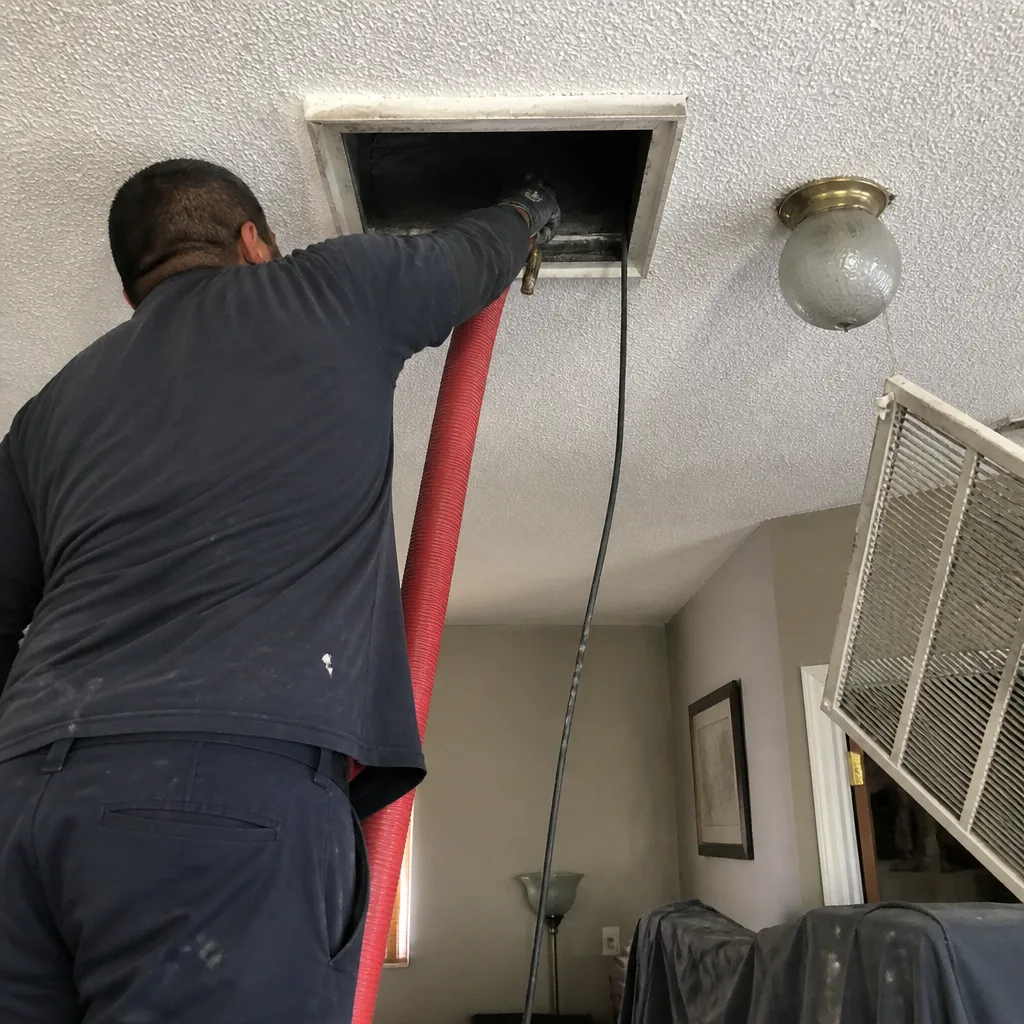 Before
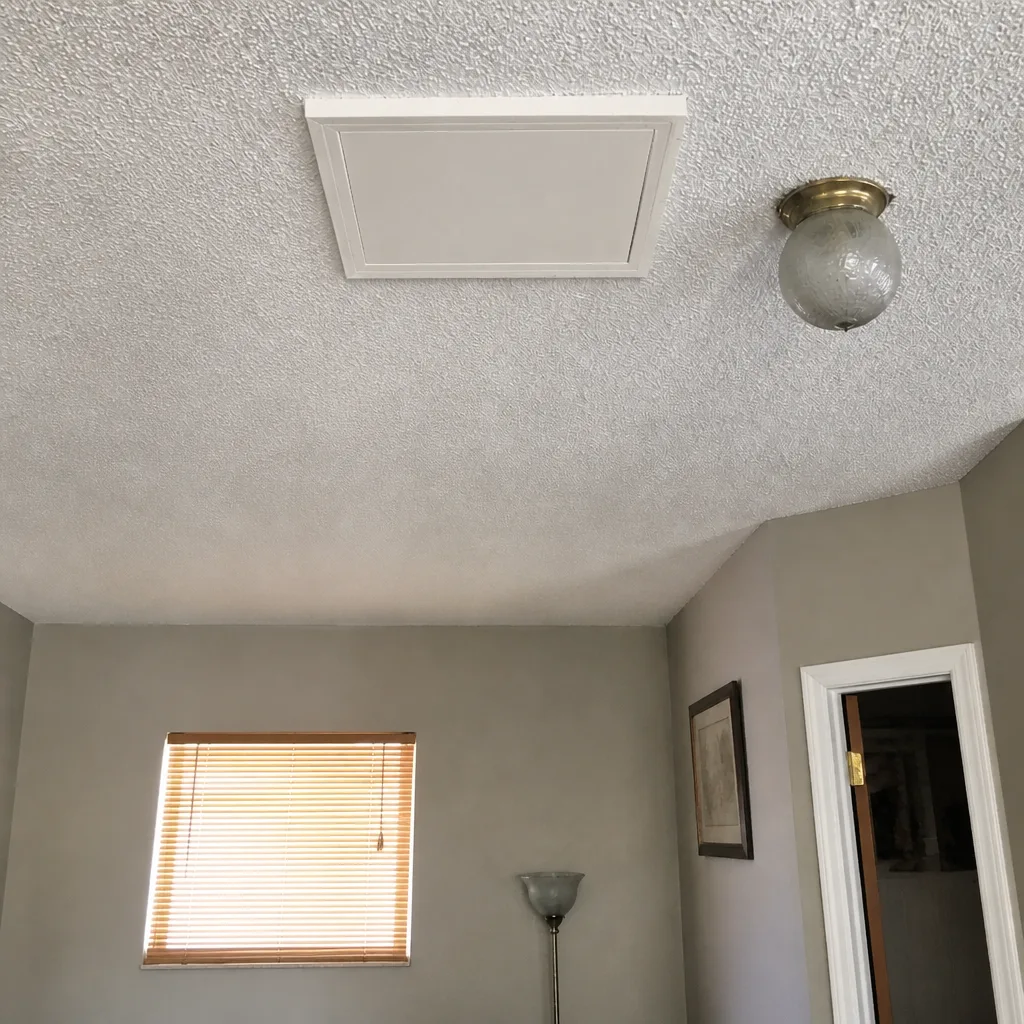 After
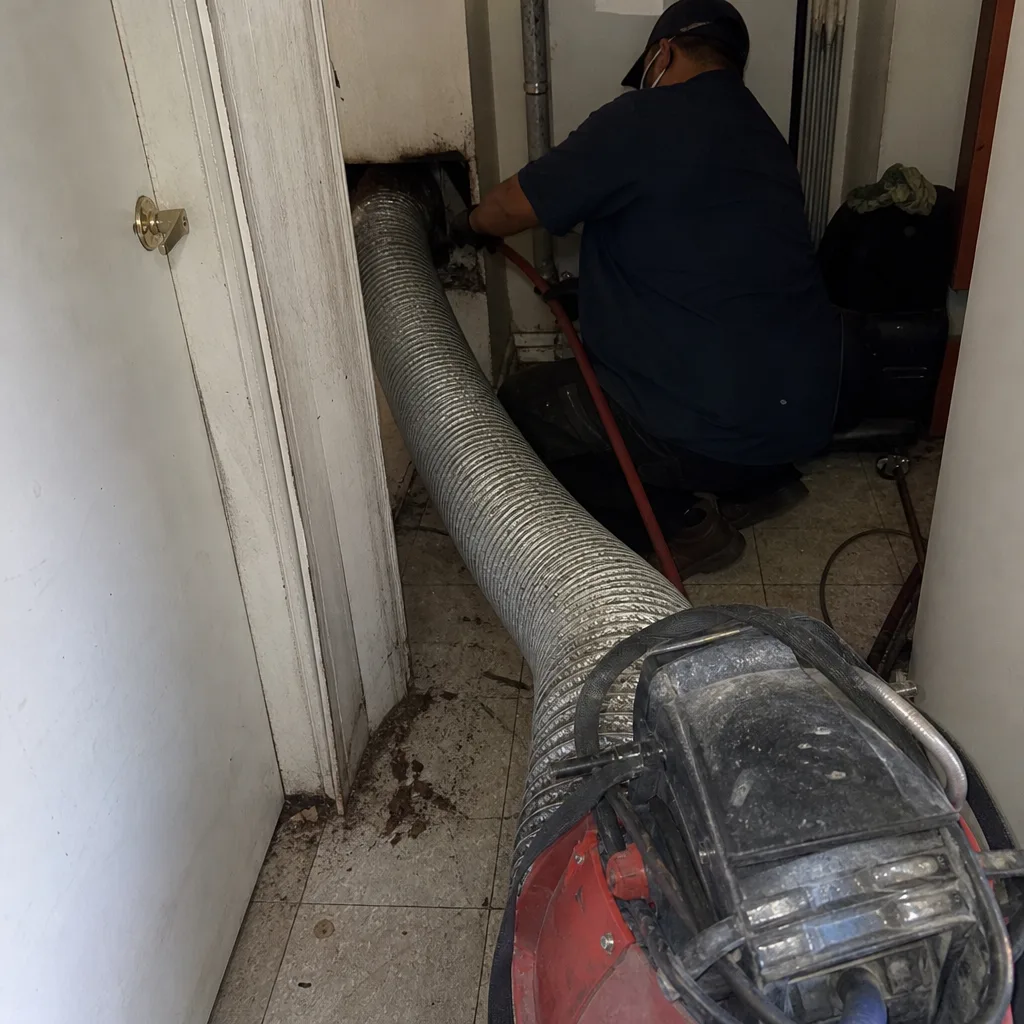 Before
 After
 Before
 After
When to Call a Professional
Call a professional if any of the following is true: you’ve been in your Miami Gardens home for two or more years without a duct cleaning, you’ve recently finished a renovation, you have pets and the registers are showing buildup, you notice a musty smell that turns on with the system, you have visible dust accumulating on furniture shortly after household cleaning, or your dryer is taking longer than it used to dry a load. Also call if you’ve never had the ducts cleaned and don’t know the last time it was done. These are all signs the system is due for assessment, not necessarily cleaning, and a professional visit is where the two get sorted out. Oasis Air Duct offers free estimates in Miami Gardens. Call (833) 384-3692. We answer 24/7. Fast dispatch from 7am to 7pm, Sunday through Friday.
Frequently Asked Questions
Every 2 to 3 years for a standard Miami Gardens home, closer to every 2 years if you have pets, a smoker in the home, recent renovation, or an older duct system. The shorter interval than the national 3-to-5-year guideline comes from year-round AC operation: the system runs nearly every day here, so it moves far more air through the same ductwork than a seasonal-climate home does.
It’s the most commonly cited general guideline, but it wasn’t written for Miami Gardens’s year-round runtime or construction-dust exposure. It’s a reasonable floor for a well-maintained home with no pets and no renovation; it’s often too long a gap for homes here with additional variables. Use your home’s own conditions to adjust.
Rotary-brush equipment like Rotobrush and HEPA-filtered vacuum systems like Nikro, not a shop vac. Ask before booking. The difference matters because a shop vac lacks the suction and filtration to reach the duct interior, and without HEPA filtration it can push fine dust back into the room instead of capturing it. Abatement Technologies equipment is relevant for heavily contaminated or post-construction jobs where containment matters most.
Not the interior. You can wipe registers, change filters, and do visual checks of accessible runs, and you should. What a homeowner cannot do is agitate and extract the bonded material on duct walls without professional-grade vacuum equipment. Attempting to reach inside a duct with a home vacuum tool risks dislodging material without capturing it.
Visible buildup in register openings, a musty smell that starts when the AC runs, dust returning to furniture within days of cleaning, and uneven airflow are the main signs. If you bought your Miami Gardens home and have no record of a prior cleaning, treat it as due. A professional assessment can confirm whether a cleaning is warranted or whether the symptoms point to a duct repair.
A typical single-system Miami Gardens home takes a few hours, and a home with multiple systems takes longer. The exact time depends on the number of systems, duct type, and how much contamination there is. When you call for the free estimate we can give you a realistic range based on your home, and the written estimate sets the actual price for the job.
The Bottom Line
A Miami Gardens duct schedule is built from local conditions, not a national calendar. The short version: every 2 to 3 years as a baseline, closer to 2 for pets, smokers, renovation, or older flex duct. Clean after hurricane season or before the summer humidity peak. Wipe registers, change filters, and visually check the system between visits; those steps help but don’t replace a professional clean. Ask for before-and-after photos and keep them. When in doubt, call for an assessment rather than guess. Oasis Air Duct is here to check any of it.
Ready for a Free Estimate?
If you’ve read this far and you’re not sure where your system sits on the schedule, a professional assessment is the place to start. Oasis Air Duct services air duct cleaning and dryer vent cleaning alongside air duct repair in Miami Gardens, so one call covers all three services. Call (833) 384-3692 for a free estimate. We answer 24/7. Fast dispatch from 7am to 7pm, Sunday through Friday.
Learn more about Oasis Air Duct and how we approach the work, from professional-grade Rotobrush and Nikro equipment to the Honeywell and Aprilaire products we install to keep your air cleaner after we leave.
Written by the team at Oasis Air Duct, serving Miami Gardens since 2013.