
How to Choose the Right Air Duct Cleaning Company in Miami Gardens
The right air duct cleaning company in Miami Gardens is the one that shows you its equipment, documents the job before and after, and gives you a quote itemized by method rather than a single lump number. Most homeowners never ask those questions, which is exactly why the low-bid operators keep winning jobs. If you’d rather not sort through the guesswork yourself, call (833) 384-3692 and we’ll walk you through what a legitimate clean actually involves.
Here’s the thing we’ve run into more than once: a homeowner hires a company because their Google rating is spotless and their van says “certified.” Then a crew arrives with a shop vac and a pressure washer hose, spends forty minutes in the house, and leaves nothing behind but a receipt. The rating stayed five stars the whole time. That’s the problem with vetting on stars alone. The questions that actually separate a real clean from a staged one are more specific, and almost nobody asks them.
What’s the first question you should ask an air duct cleaning company?
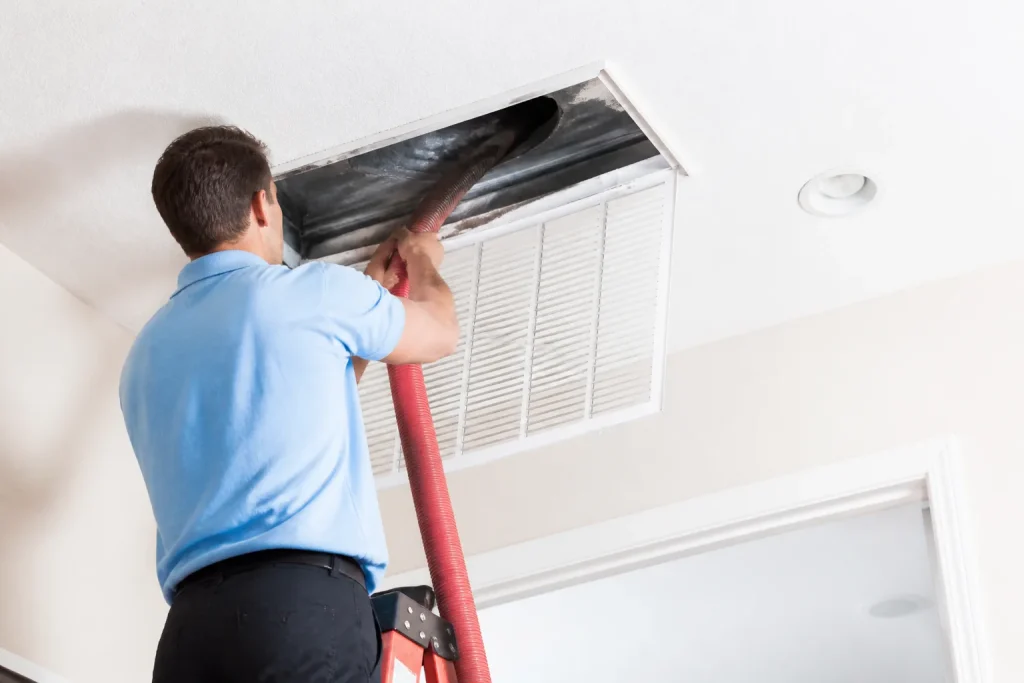
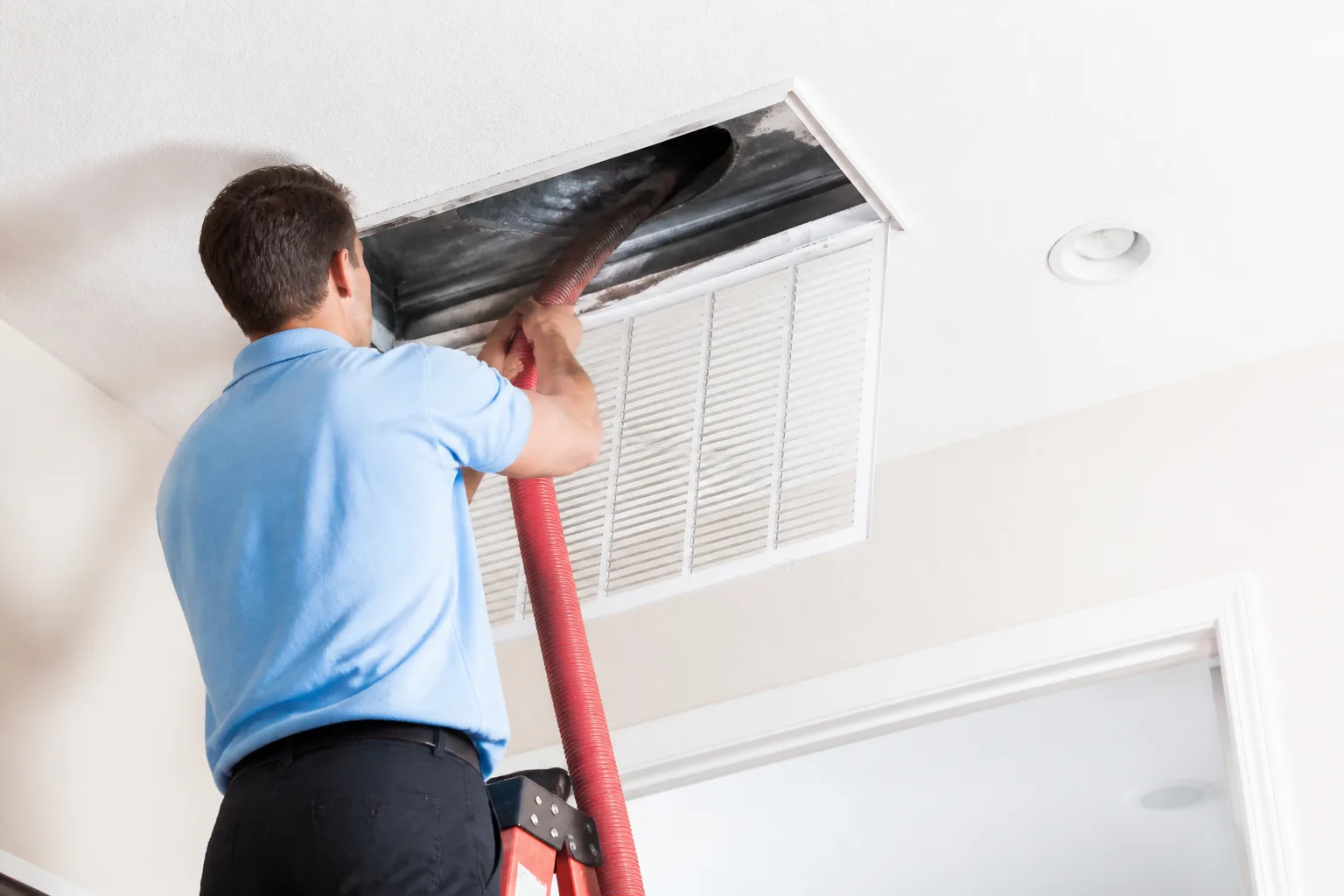
Ask what CFM rating their negative air pressure collection unit runs at. CFM means cubic feet per minute, and it tells you how much air the vacuum can actually pull while the system is being agitated. A serious collection unit moves in the thousands of CFM. A shop vac moves a tiny fraction of that, and a leaf blower moves none at all, because it’s pushing air, not capturing it. The follow-up question matters just as much: is the collection unit HEPA-filtered? Without HEPA filtration, the fine particulate you’re trying to remove just gets exhausted back into the room. We run Nikro HEPA-filtered vacuum equipment on every job, and when ductwork is heavily fouled we bring Abatement Technologies filtration gear for containment. The point isn’t the brand name on the truck. The point is that a company should be able to tell you, without hesitation, exactly what’s pulling the air and where it’s going. If the answer is vague, thank them and move on.
Why does a pre-job inspection with camera footage matter?
A real inspection shows you the inside of your ducts on a screen before anyone touches a brush. That footage does two things. It identifies the actual condition of your system (dust buildup, debris, disconnected runs, pest evidence, moisture) and it creates a baseline you can hold the company to afterward. A company that skips the before documentation has no accountability for the after, because there’s nothing to compare against.
During the walkthrough, a good technician in Miami Gardens will also want to see how the system was built into the house. A lot of the homes here sit on slab, which means the flex and hard-pipe runs travel through the attic and down through interior chases rather than through a basement. That layout affects how many access points are needed and how the agitation equipment reaches each branch. A company that quotes without looking at the register count and the access situation is guessing, and the guess usually gets corrected on the invoice.
- What to expect: a camera scope of the main trunk and at least a sample of the branches
- What to expect: an honest register count, not an estimate
- Red flag: “we don’t need to look, we do these every day”
- Red flag: a price quoted before anyone walks the house
How should you read an air duct cleaning quote line by line?
Legitimate quotes itemize three things: access points, agitation method, and collection equipment. A thin quote gives you one number and calls it done. That single number is where the bait-and-switch lives, because once the crew is on the driveway, everything that wasn’t written down becomes an add-on. Reading the quote is your best defense, and it’s simpler than homeowners expect. Look for these line items and ask about anything missing:
- Access points: how many cuts or existing openings will be used to reach the system, and who seals them afterward
- Agitation method: rotary brush, compressed air whip, or manual, and which system they use. Rotobrush rotary-brush systems are the standard for a reason, because they physically scrape the buildup off the duct wall rather than just stirring dust into the air stream
- Collection equipment: the CFM rating and whether the vacuum is HEPA-filtered, as covered above
- Register count: the number of supply and return registers being serviced, spelled out
- What’s excluded: duct repair, dryer vent, or IAQ work, listed clearly if it isn’t part of the job
If a quote won’t break down this way, that’s your answer about the company. For a fuller picture of what a proper clean includes, the air duct cleaning page walks through the process step by step.
What licensing and insurance should you verify in Florida?
Verify two things separately: the business license and the liability insurance, and read what the liability policy actually covers. A general contractor’s coverage is written around construction and remodeling work. What you want to confirm is liability coverage relevant to working inside a pressurized air system, because a crew opening your ductwork and running equipment in your attic is a different exposure than a crew framing a wall. Ask for the certificate of insurance and check that it’s current. A legitimate company will send it without fuss. A low-bid operator often can’t produce one at all, which tells you everything about how the job will go if something cracks a duct or a supply boot gets damaged.
This is also where the “are you certified?” question falls short. Memberships and associations are worth something, but a company with a shop vac and a pressure washer hose can hold a membership and a five-star rating indefinitely. Licensing and insurance show they have skin in the game. Equipment shows they have the tools. Ask about both.
What should the company hand you after the job?
You should get written documentation of three things: what was found during inspection, what was done during the clean, and the register count that was actually serviced. That last one is the deliverable most homeowners never think to ask for, and it’s the one that keeps a company honest. If a quote said eleven registers and the documentation says eleven registers were serviced, the numbers line up. If nobody wrote anything down, you have no way of knowing what happened in your attic.
Before-and-after photos of your own ducts belong in that same packet. We photograph the same access points going in and coming out, and the homeowner keeps both. It’s a small thing that separates an accountable company from a transactional one. Ask any company you’re vetting whether they can show you your own ducts, not stock photos of somebody else’s clean.
When should you call a pro instead of waiting?
There are a handful of signals that mean stop researching and start calling. Visible dust blowing out of supply registers right after the HVAC cycles on. A musty or stale smell that gets stronger when the system runs. Allergy symptoms that get worse indoors. A new-to-you home with an unknown service history. Or a dryer that takes two cycles to dry a load, which points toward a clogged vent rather than the ducts.
That last signal is worth its own call, because dryer vents are a fire concern, not a comfort concern, and they deserve a trained set of eyes. In our experience, dryer vent cleaning is often what a homeowner actually needs when they call about ducts. Sometimes the ducts are fine and a crushed, disconnected run is the real problem, which is where Miami Gardens homeowners benefit from a company that also handles duct repair instead of outsourcing it. We clean it. We repair it. We clear it, and one company can assess the whole system in a single visit.
The Bottom Line
Vet on equipment and documentation, not stars. Ask what the collection unit’s CFM rating is, confirm the vacuum is HEPA-filtered, demand a camera inspection before the work starts, read the quote line by line, verify liability coverage relevant to ductwork, and expect written documentation plus before-and-after photos when the job is done. A company that checks all of those boxes is doing verifiable work. A company that dodges the equipment question isn’t.
Oasis Air Duct has served Miami Gardens since 2013, and our approach is built around professional-grade equipment rather than the cheapest quote on the block. We use Rotobrush and Nikro systems on every job, and we can work with your insurer when it’s relevant. If you’re in Miami Gardens and want a straight answer about your ducts, call (833) 384-3692 for a free estimate.
Frequently Asked Questions
Ask for before-and-after photos of your own ducts and written documentation listing the access points serviced and the register count. A company that photographs the same access points going in and coming out gives you proof; one that can only offer a receipt doesn’t. If you’d like to see how we document a job, call (833) 384-3692 and estimates are free.
Low quotes usually omit the collection equipment, the HEPA filtration, or the register count from the written line items, and the missing work gets priced once the crew is on site. A quote that itemizes access points, agitation method, and equipment tells you what you’re actually buying. Call (833) 384-3692 for an itemized estimate on your system.
Expect a negative air pressure collection unit in the thousands of CFM with HEPA filtration, plus a rotary-brush agitation system such as Rotobrush. Shop vacuums and consumer blowers don’t capture fine particulate, they redistribute it. If the equipment list is vague, ask again.
There’s no universal schedule. A home with pets, recent renovation dust, or an unknown service history usually needs it sooner than one maintained since move-in. The honest answer comes from a camera inspection of your specific system, not a calendar. Call (833) 384-3692 and we’ll tell you what your ducts actually show.
We answer 24/7. Fast dispatch from 7am to 7pm, Sunday through Friday.
Written by the team at Oasis Air Duct, serving Miami Gardens since 2013.
Need Air Duct Cleaning Help?
Call Oasis Air Duct - licensed & insured, with free written estimates in Miami Gardens.
(833) 384-3692